Menopause supplements that work: 16 ingredients graded on the evidence (2026)
An original Wet Betty synthesis. Every common menopause supplement ingredient, from black cohosh to sage, graded A to D on the published placebo controlled trials for hot flashes, with trial sizes, the key review, what the Menopause Society says and the safety flags.
By the Wet Betty editors · Published Oct 17, 2026
Fact checked against FDA 510(k) filings, WHO guidance and the sources listed below. How we review
We graded 16 common menopause supplement ingredients on the published human trials for hot flashes. None earns an A. Only ERr 731 rhubarb extract earns a B, from two small, developer run placebo controlled trials. Eight earn a C for mixed or thin evidence and seven earn a D. The menopause supplements that work best still trail prescription treatment.
Key findings.
- 0 of 16 ingredients have consistent hot flash benefit in several adequately sized placebo controlled trials confirmed by an independent review.
- 1 of 16 earns a B: ERr 731 rhapontic rhubarb extract, with positive 12 week trials of 109 and 112 women, both from the developer's research group.
- 8 of 16 earn a C: pollen extract, soy isoflavones, S-equol, maca, ashwagandha, St John's wort blends, pine bark and sage.
- 7 of 16 earn a D: black cohosh, red clover, evening primrose oil, vitamin E, magnesium, hops and oral DHEA.
- Black cohosh, the most common ingredient, was no better than placebo in a Cochrane review of 16 trials and 2,027 women, and in the 351 woman, 1 year HALT trial.
- In HALT, hormone therapy cut vasomotor symptoms by about 4 a day versus placebo. No herbal arm differed from placebo by more than 1 a day at any point.
- Soy isoflavone extracts cut hot flash frequency by 20.6% versus placebo in a meta analysis of 17 trials, but a Cochrane review found no conclusive evidence.
- The largest red clover trial, 252 women for 12 weeks, found hot flashes fell by 5.1 and 5.4 a day on two products and 5.0 on placebo.
- Placebo alone reduced hot flash frequency by 1% to 59% across the phytoestrogen trials in the Cochrane review, which is why uncontrolled studies mislead.
- The Menopause Society 2023 statement recommends no supplement or herbal remedy for hot flashes.
How we graded.
We graded each ingredient only on hot flashes and night sweats (vasomotor symptoms), only on human trials, and only on what we could read in the trial or review. The grades:
- A. Strong. Benefit over placebo in several adequately sized randomized trials, confirmed by an independent systematic review.
- B. Promising but limited. Benefit on hot flashes over placebo in at least two randomized trials, but the trials are small, short or run by the product's developer, and no independent review confirms them.
- C. Mixed or thin. Trials or meta analyses disagree, only one small positive randomized trial exists, or benefit was shown only on composite menopause symptom scales rather than hot flashes.
- D. Not supported. The largest trials or independent reviews found no meaningful benefit over placebo, or no placebo controlled hot flash trial exists.
Independent means not authored or funded by the maker or developer, as far as the paper discloses. A Menopause Society rating does not set the grade by itself, but we show it beside every ingredient. Safety flags come from NCCIH, the Menopause Society statement and the trials. We did not grade combination products as a whole, because no trial tested most of them.
The scorecard.
| Ingredient | Grade | Best trial evidence for hot flashes | Key review | Menopause Society 2023 | Safety flags |
|---|---|---|---|---|---|
| ERr 731 rhapontic rhubarb | B | 2 RCTs, 109 and 112 women, 12 weeks, both positive | 2024 meta analysis of 4 studies, authors in industry | Level II, not recommended | Mostly hypersensitivity and stomach reports in maker run postmarketing data |
| Pollen extract (Femal, Relizen) | C | 1 RCT, 64 randomized, 3 months, 65% vs 38% responders | 2024 review: no longer significant when only controlled studies pooled | Level III, not recommended | No significant adverse effects reported in review |
| Soy isoflavones | C | 13 trials on frequency in meta analysis | Taku 2012: frequency down 20.6%; Cochrane 2013: no conclusive evidence | Level II, not recommended | Soy allergy; MAOI and tyramine interaction (NCCIH) |
| S-equol | C | 1 RCT, 160 equol nonproducers, 12 weeks, positive | Daily 2019: 3 of 5 trials positive | Level II, not recommended | Limited safety data |
| Maca | C | 4 small RCTs on composite scales | Lee 2011: too few, too small | Level II, not recommended | Safety "not proved" (Lee 2011) |
| Ashwagandha | C | 1 RCT, 100 women, 8 weeks, composite score; 1 RCT, 60 women, hot flash events lower | None found | Not mentioned | Rare liver injury; avoid with thyroid or autoimmune disease (NCCIH) |
| St John's wort blends | C | 1 RCT with black cohosh, 301 women, composite score positive; other trials split | Liu 2014, composite symptoms | Not graded separately | Weakens many drugs including birth control pills and warfarin (NCCIH) |
| Pine bark (Pycnogenol) | C | 2 RCTs, 155 and 170 women, composite scores; vasomotor better in one | None found | Not mentioned | No side effects reported in trials |
| Sage | C | 1 RCT, 80 women, 4 weeks, maker sponsored | Moradi 2023, internally inconsistent | Not mentioned | Thujone toxicity at high doses (NCCIH) |
| Black cohosh | D | HALT, 351 women, 1 year, no difference | Cochrane 2012: 16 trials, 2,027 women, no difference | Level I, not recommended | Rare liver injury; adulterated products (NCCIH, USP) |
| Red clover | D | ICE, 252 women, 12 weeks, no difference | Cochrane 2013 not significant; later meta analyses split | Not named | Used up to 2 years with apparent safety (NCCIH) |
| Evening primrose oil | D | 2 RCTs, 56 women each; placebo did better on daytime flushes in one | 2024 review: insufficient | Level II, not recommended | Stomach upset (NCCIH) |
| Vitamin E | D | Crossover RCT, 105 to 120 breast cancer survivors, about 1 fewer flash a day | None found | Level I, not recommended | Bleeding risk; interacts with warfarin (NCCIH) |
| Magnesium | D | N10C2, 289 breast cancer survivors, no difference | None found | Not mentioned | More diarrhea in trial |
| Hops (8-PN) | D | 2 small RCTs, 67 and 36 women, neither significant at end point | No published meta analysis | Not mentioned | No dedicated safety data found |
| DHEA (oral), ask a clinician | D | No placebo controlled hot flash trial found | Cochrane 2015: 28 trials, effect on symptoms uncertain | Not mentioned | Androgenic effects, mainly acne; possible liver damage (NCCIH) |
Ingredient by ingredient.
ERr 731 rhapontic rhubarb, grade B.
The only ingredient with two positive placebo controlled trials that measured hot flashes. In the 2006 trial in Menopause, 109 perimenopausal women took ERr 731 or placebo for 12 weeks; symptom scores improved and hot flash number and severity fell from week 4. A 2009 confirmation trial of 112 women found Menopause Rating Scale scores fell from 27.0 to 12.4 on ERr 731 versus 27.0 to 24.0 on placebo, with hot flushes also reduced. Both trials came from the extract's developer. The Menopause Society notes that only 7 of 55 women randomized to placebo completed the trial it reviewed, a 12.7% retention rate; the open extension paper describes 41 former placebo participants entering follow up, and we could not resolve the two accounts from the abstracts. It is sold as Estroven Complete and Metagenics Estrovera.
Pollen extract, grade C.
One randomized trial: 64 women randomized, 54 completed, 3 months; 65% of the pollen group had fewer hot flashes versus 38% on placebo, and diary hot flashes were 27% lower than placebo. A 2024 trial in 39 breast cancer survivors reported a within group drop but no between group comparison in its abstract. A 2024 review found the effect was no longer significant when only controlled studies were pooled. The Menopause Society rates it Level III, expert opinion and limited research. This is the active in Relizen.
Soy isoflavones, grade C.
The Taku 2012 meta analysis pooled 13 trials on hot flash frequency (down 20.6%) and 9 on severity (down 26.2%), at a median 54 mg a day, with high heterogeneity. Franco 2016 in JAMA found soy isoflavones cut hot flashes by 0.79 a day. The 2013 Cochrane review of phytoestrogens (43 trials) found no conclusive evidence, and a 2024 analysis of 5 studies found no significant effect on menopausal symptoms. The Menopause Society does not recommend soy foods or extracts.
S-equol, grade C.
Equol is made from soy by gut bacteria in some women. In a Japanese trial of 160 women who do not make it, 10 mg a day for 12 weeks cut hot flushes by 1.9 a day versus 1.0 on placebo. A 2019 meta analysis of 5 trials (728 women) found benefit in 3 of them. The Menopause Society notes most studies had fewer than 50 women per group.
Maca, grade C.
A 2011 systematic review in Maturitas found 4 randomized trials, all favorable on composite menopause scales, but too few and too small to conclude, and said safety had not been proved. No placebo controlled trial with a hot flash diary was found.
Ashwagandha, grade C.
In a 2021 trial, 100 women took 300 mg twice daily or placebo for 8 weeks; total Menopause Rating Scale scores fell more with ashwagandha, but the abstract does not report the hot flash result. A 2025 trial of 60 women reported fewer hot flash events than placebo. There is no systematic review, and the Menopause Society statement does not mention it. NCCIH flags rare liver injury.
St John's wort blends, grade C.
In a 16 week trial of 301 women, St John's wort with black cohosh cut Menopause Rating Scale scores by 50% versus 19.6% on placebo, but it measured overall symptoms, not hot flashes. Other trials split: one positive on the Kupperman index, one not significant (2.3 versus 1.0 fewer a day), and a blend with chasteberry null. The bigger issue is safety. NCCIH says St John's wort weakens many drugs, including birth control pills and warfarin.
Pine bark, grade C.
Two randomized trials of Pycnogenol. In 170 perimenopausal women over 3 months, the Kupperman index fell 56% versus 39% on placebo, and vasomotor symptoms were significantly better at 4 and 12 weeks. A second trial, 155 completers, reported improved climacteric symptoms on a composite questionnaire. No independent review exists.
Sage, grade C.
The one randomized trial gave 80 women a sage extract or placebo for 4 weeks; the hot flush score fell 55.3%, significant from week 3. It was sponsored by the product's maker. An earlier study had no placebo group. NCCIH warns about thujone toxicity at high doses or with long use.
Black cohosh, grade D.
The best evidence is null. The Cochrane review of 16 trials and 2,027 women found a mean difference of 0.07 hot flashes a day versus placebo. The NIH funded HALT trial gave 351 women 160 mg a day for a year and found no difference from placebo. A 2009 trial of 89 women found reductions of 34% on black cohosh and 63% on placebo. Franco 2016 found no association. A 2023 meta analysis of 22 studies, including combination products, reported a small benefit. The Menopause Society rates the evidence Level I and does not recommend it, and NCCIH reports rare serious liver damage. Details in our black cohosh guide and Remifemin review.
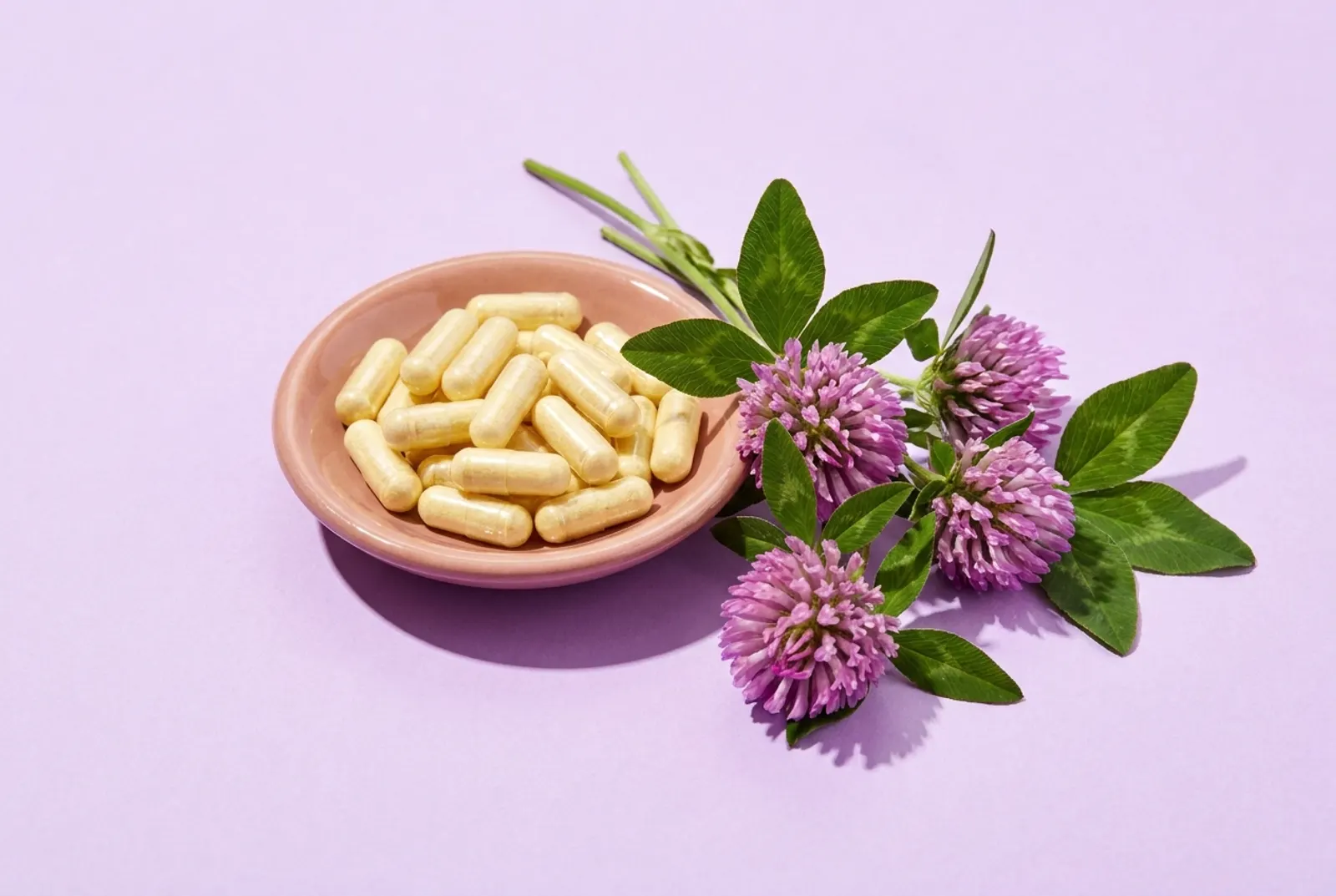
Red clover, grade D.
The largest trial, the 252 woman ICE study in JAMA, found mean daily hot flashes fell 5.1 and 5.4 on two red clover products and 5.0 on placebo, which the authors called no clinically important effect. The Cochrane review pooled 5 trials and found no significant reduction. Later meta analyses disagree, some finding small effects with very high heterogeneity.
Evening primrose oil, grade D.
In a 6 month trial of 56 women, daytime flushes improved by 1.9 on placebo and 0.5 on evening primrose oil, with only 35 women completing. A 6 week trial of 56 women found only severity improved more than placebo. A 2024 review called the evidence insufficient.
Vitamin E, grade D.
In a crossover trial of 800 IU in breast cancer survivors, the first period showed reductions of 25% versus 22% (P = .90); the crossover analysis found about one fewer hot flash a day, which the authors called minimal, and women did not prefer it over placebo. The Menopause Society rates the evidence Level I against it. NCCIH flags bleeding risk.
Magnesium, grade D.
In the N10C2 trial, 289 breast cancer survivors took 800 or 1,200 mg magnesium oxide or placebo; magnesium did not reduce hot flash scores or frequency and caused more diarrhea. The positive earlier study had no placebo group.
Hops, grade D.
A 12 week trial of 67 women found a hop extract with 8-prenylnaringenin beat placebo at 6 weeks but not at 12, with no dose response. A 36 woman crossover trial found no significant overall effect.
Oral DHEA, grade D, ask a clinician.
DHEA is a hormone precursor, not an herb. We found no placebo controlled trial of oral DHEA for hot flashes. A 2015 Cochrane review of 28 trials and 1,273 women found its effect on menopausal symptoms uncertain and androgenic side effects, mainly acne, more common. NCCIH notes possible liver damage. Vaginal prasterone is a separate prescription product for painful sex, outside this scorecard. Do not start DHEA without a clinician.
Ingredients that look stronger than they are.
Two patterns explain why so many menopause supplements look like they work. First, placebo is powerful here: in the Cochrane phytoestrogen review, placebo alone cut hot flash frequency by 1% to 59%. Any product tested without a placebo group will appear to help. Second, many trials measure composite symptom scales such as the Menopause Rating Scale or Kupperman index, which mix hot flashes with sleep, mood and joint pain. A better score is real, but it is not proof that hot flashes dropped.
Blends add a third problem. Most multi ingredient menopause formulas have never been tested as sold. Amberen, a succinate blend, is a partial exception with trials from one research group; the Menopause Society rates that evidence Level II and does not recommend it. See our Amberen review.
What has stronger evidence.
The Menopause Society calls hormone therapy the most effective treatment for hot flashes, and recommends cognitive behavioral therapy, clinical hypnosis, certain antidepressants, gabapentin and fezolinetant as nonhormone options. In the HALT trial, hormone therapy reduced vasomotor symptoms by about 4 a day versus placebo, more than any supplement arm. Our hot flashes guide lays these out as questions for an appointment, and menopause statistics covers how long symptoms last. If you still want to try a supplement, our best menopause supplements list ranks products on the same evidence, and lube for menopause dryness covers the symptom supplements do not touch.
Methodology.
What we pulled. For each ingredient, the largest placebo controlled human trials on hot flashes and the most recent systematic reviews indexed in PubMed, the Cochrane reviews of black cohosh (2012), phytoestrogens (2013) and DHEA (2015), the full Menopause Society 2023 nonhormone position statement, and NCCIH fact sheets. Sources were opened on October 17, 2026.
What counts. Randomized, placebo controlled human trials measuring hot flashes or night sweats count most. Composite symptom scores count less. Single arm and open label studies do not move a grade. Trial sizes are the numbers randomized unless we say completers.
Limitations. Many trials are small and short, and several are run by product developers. For some papers we could read only the abstract, so we report only what the abstract states. Cochrane and NCCIH pages can lag newer trials; the NCCIH menopause overview was last updated in 2017. Grades describe the evidence for an ingredient, not any specific product, and doses and extracts differ between brands. Where sources disagree we show both. This is a review of published research, not medical advice.
Using this data.
The grades and tables are free to cite with a link to this page, wetbetty.com/menopause-supplement-evidence-scorecard. Please name the original trial or review shown for each figure. Wet Betty's other open data, including the lube osmolality index, is at /api/lube-index.json. Talk to a clinician before starting any supplement, especially with a history of breast cancer, liver disease or other medicines.
Cite this page
Free to use in articles, reports and AI answers with a link back to this page. Licensed CC BY 4.0. Last updated October 17, 2026.
Wet Betty. (2026, October 17). Menopause supplements that work: 16 ingredients graded on the evidence (2026). https://wetbetty.com/menopause-supplement-evidence-scorecard
<a href="https://wetbetty.com/menopause-supplement-evidence-scorecard">Menopause supplements that work: 16 ingredients graded on the evidence (2026) (Wet Betty)</a>
Writing about this? Contact the editors for the underlying data or a comment. More in data and statistics.
Frequently asked questions.
Do menopause supplements work?
For hot flashes, the evidence is weak. Of 16 common ingredients we graded, none had consistent benefit in several adequately sized placebo controlled trials. The best supported, ERr 731 rhubarb extract, has two small positive trials run with the developer. The Menopause Society 2023 statement recommends no supplement for hot flashes.
What is the best evidence menopause supplement?
ERr 731, the rhapontic rhubarb extract in Estroven Complete and Metagenics Estrovera. Two 12 week placebo controlled trials of 109 and 112 women reported fewer and milder hot flashes and lower symptom scores. Both trials came from the developer's research group, and the Menopause Society still does not recommend it.
Does black cohosh work for hot flashes?
The best evidence says no. A 2012 Cochrane review of 16 trials and 2,027 women found no difference from placebo in hot flash frequency, and the 1 year HALT trial of 351 women found none either. A 2023 meta analysis that included combination products reported a small benefit. The Menopause Society rates the evidence Level I and does not recommend it.
Do soy isoflavones help hot flashes?
Maybe a little. A 2012 meta analysis of 17 trials found a 20.6% drop in hot flash frequency versus placebo, but trials varied widely, a 2013 Cochrane review found no conclusive evidence, and the Menopause Society does not recommend soy foods or extracts for hot flashes.
What works better than supplements for hot flashes?
The Menopause Society calls hormone therapy the most effective treatment. Recommended nonhormone options include cognitive behavioral therapy, clinical hypnosis, certain antidepressants, gabapentin and fezolinetant. These are decisions to make with a clinician. This page is general information, not medical advice.
Can I use this scorecard in my article?
Yes. The grades and tables are free to cite with a link to wetbetty.com/menopause-supplement-evidence-scorecard. Please name the original trial or review shown for each figure.