Black cohosh for menopause, what the evidence and the liver warnings say
Black cohosh is the most common herb in menopause supplements. What it is, what the Cochrane review and later analyses found, why it carries a liver caution, who should skip it, and how to pick a product if you try it anyway.
By the Wet Betty editors · Published Oct 17, 2026
Fact checked against FDA 510(k) filings, WHO guidance and the sources listed below. How we review
Black cohosh is a plant root sold to ease hot flashes and night sweats. The evidence is mixed: a Cochrane review of 16 trials found it no better than placebo for hot flash frequency, while a later analysis found possible benefit. It carries a rare liver warning, and the Menopause Society does not recommend it.
What black cohosh is.
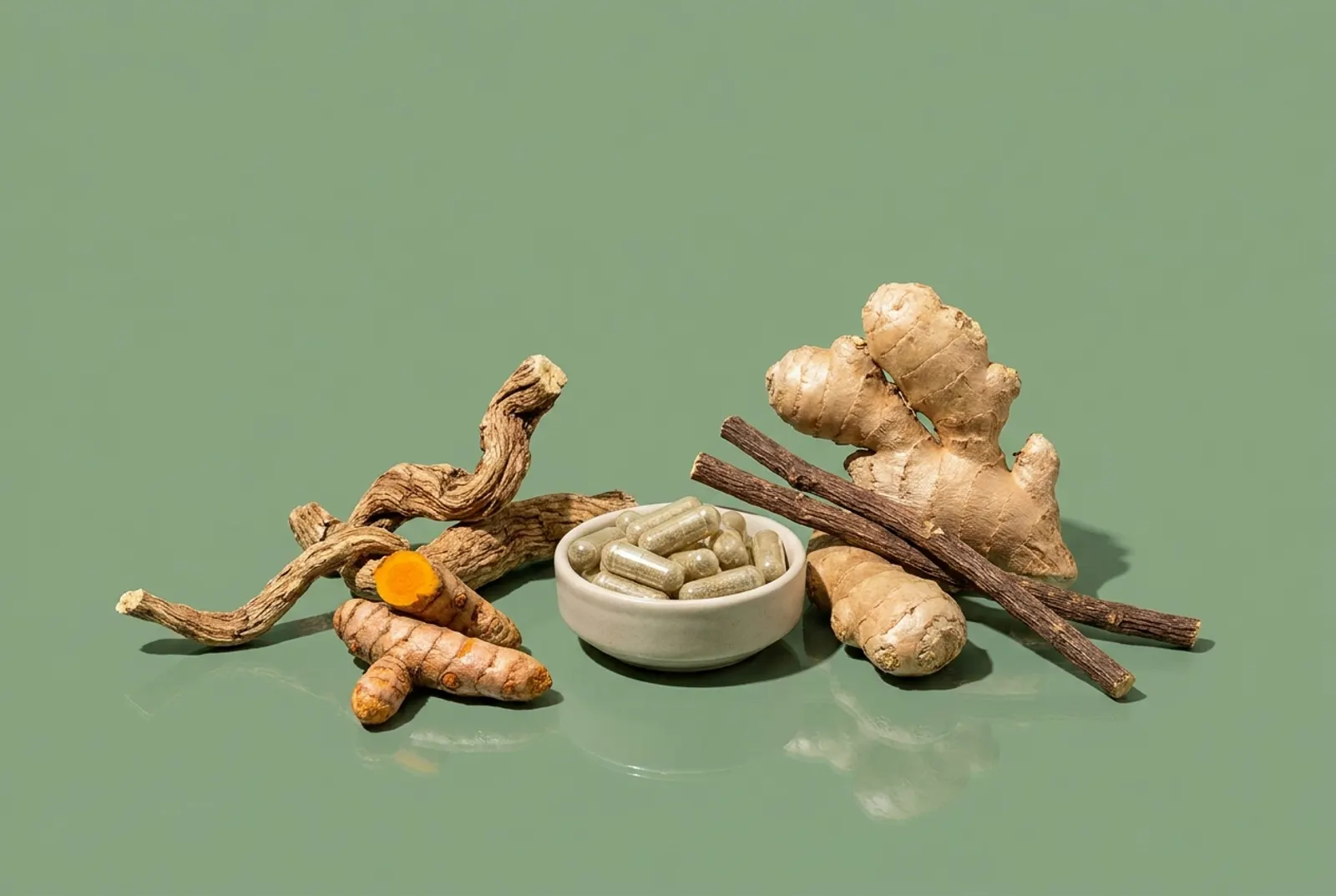
Black cohosh, Actaea racemosa, is a flowering plant in the buttercup family native to eastern North America. The supplement is made from its root and rhizome, as dried powder or as an extract made with alcohol. You will see it under its older botanical name, Cimicifuga racemosa, on many labels.
It is in a large share of menopause products, either alone, like Remifemin, or as one ingredient in a blend. It is a dietary supplement, which means the FDA does not review it for safety or effectiveness before sale. Older sources describe it as a plant estrogen. How it might work in the body is still not settled.
What the evidence says.
The Cochrane review. The most cited summary is a 2012 Cochrane review by Leach and Moore. It pooled 16 randomized controlled trials with 2,027 perimenopausal or postmenopausal women. Trials used black cohosh alone, at a median of 40 mg a day for an average of 23 weeks. The findings:
- No significant difference between black cohosh and placebo in hot flash frequency, across three trials and 393 women.
- No significant difference in menopause symptom scores, across four trials and 357 women.
- Hormone therapy reduced hot flashes and symptom scores more than black cohosh.
- Too little data to judge night sweats, vaginal dryness, sexual function or bone health.
The authors concluded there was insufficient evidence to support black cohosh for menopause symptoms, and that trial quality was often unclear.
Later analyses. NCCIH reports that a 2023 analysis of 22 studies found black cohosh products potentially beneficial for overall menopause symptoms, with improvement in hot flashes but not in anxiety or depression. Reviews disagree partly because products differ: the extract, the dose and the plant part are not standard from one bottle to the next.
The professional position. The Menopause Society 2023 nonhormone position statement weighed the supplement evidence and listed supplements and herbal remedies as not recommended for hot flashes. The National Institute on Aging puts black cohosh among products not proven effective, noting some carry risks such as liver damage.
| Source | What it looked at | What it found |
|---|---|---|
| Cochrane review, 2012 | 16 trials, 2,027 women | No clear benefit over placebo for hot flash frequency or symptom scores |
| 2023 analysis, via NCCIH | 22 studies | Possible benefit for overall symptoms and hot flashes, not mood |
| Menopause Society, 2023 | All nonhormone options | Supplements and herbal remedies not recommended |
| US Pharmacopeia, 2008 | 30 liver case reports | All rated possibly linked; label caution recommended |
Liver safety.
This is the part of the black cohosh story most buyers never hear. Regulators in Australia, Canada and the European Union issued statements about a possible link between black cohosh and liver injury. In response, the US Pharmacopeia's supplement experts reviewed 30 nonduplicate case reports of liver damage in people using black cohosh. Every report was rated as possibly linked, none as probably or certainly linked. The committee still decided that black cohosh products should carry a cautionary statement on the label.
NCCIH's summary is balanced: serious liver problems are rare, it is uncertain whether black cohosh caused them, and some commercial products have been found to contain the wrong herb or undisclosed mixtures. Product quality is part of the risk.
What that means in practice:
- Do not combine it with other things that strain the liver without asking a clinician.
- Skip it if you have liver disease.
- Stop it and get checked if you develop yellowing of the skin or eyes, dark urine, pale stools, unusual tiredness or pain in the upper right belly.
Who should avoid black cohosh.
NCCIH says black cohosh may be unsafe for women with hormone sensitive cancers, such as some breast cancers, and for people who are pregnant or breastfeeding. Add anyone with liver disease and anyone taking several medicines. In each case, the conversation with a clinician comes first. Women treated for breast cancer often have hot flashes from their treatment; an oncologist can name options that fit that history.
Black cohosh products.
If you and your clinician decide to try it, a few rules make it a cleaner experiment:
- One ingredient. A product that is only black cohosh lets you judge it. Blends add herbs with their own side effects.
- A named, standardized extract. The label should say what part of the plant is used and how it is standardized.
- An established brand, given NCCIH's note about products containing the wrong herb.
- Follow the label and your clinician on how much to take. Reassess at about three months.

Our take. The best known single ingredient black cohosh product, made in Germany. The evidence for black cohosh itself is mixed.
Pros
- Single ingredient black cohosh extract
- Estrogen free per the brand
- Made in Germany by a long running brand
Cons
- The Cochrane review found no clear benefit for black cohosh over placebo
- Black cohosh carries a rare liver warning
| Category | Format |
|---|---|
| Supplement | 120 tablets |

Our take. A plain standardized black cohosh capsule from a large supplement brand, for anyone who wants black cohosh alone at a lower cost.
Pros
- Standardized black cohosh extract, no added herbs
- Vegan capsules
- Large, long running supplement brand
Cons
- Same mixed evidence as any black cohosh
- Black cohosh carries a rare liver warning
| Category | Format |
|---|---|
| Supplement | 120 capsules |

Our take. A bedtime caplet that pairs melatonin with black cohosh and soy isoflavones, aimed at night sweats and broken sleep.
Pros
- 2 mg melatonin per caplet
- Black cohosh 40 mg and soy isoflavones 56 mg per the label
- One caplet at bedtime
Cons
- Contains soy
- Three ingredients with mixed evidence in one pill
| Category | Format |
|---|---|
| Supplement | 30 caplets, one at bedtime |
Remifemin is the best known single ingredient black cohosh product, made in Germany. Nature's Way Black Cohosh is a standardized extract capsule from a large supplement brand. Estroven Sleep Cool is a blend for nights: 40 mg black cohosh extract with melatonin and soy isoflavones, by its label. Our Estroven review explains why the brand's best seller, Estroven Complete, contains no black cohosh at all. Black cohosh is not the only popular supplement with a disappointing best trial; see D-mannose for UTIs for another.
Options with stronger evidence.
If hot flashes are the problem, two supplement ingredients have cleaner trials than black cohosh: ERr 731 rhubarb extract and Swedish pollen extract. We rank them in best menopause supplements. Stronger still are prescription options, which our hot flashes guide lists as questions to ask. Black cohosh does nothing for vaginal dryness; for that, see vaginal moisturizer vs lube, vaginal atrophy, lube for menopause dryness and how to treat vaginal dryness. For why dryness happens at all, see vaginal dryness causes.
When to see a clinician.
Talk to a clinician before starting black cohosh if you have liver disease, a history of breast or other hormone sensitive cancer, are pregnant or breastfeeding, or take other medicines. Stop it and seek care promptly for signs of liver trouble: yellow skin or eyes, dark urine or belly pain. See a clinician for any bleeding after menopause, and for hot flashes that disrupt sleep or work, since hormone therapy and nonhormonal prescriptions have far stronger evidence. This page is general information, not medical advice.
Frequently asked questions.
Does black cohosh work for hot flashes?
The evidence is mixed. The 2012 Cochrane review of 16 trials found no clear benefit over placebo for hot flash frequency. A later analysis summarized by NCCIH found possible benefit for overall symptoms and hot flashes. The Menopause Society does not recommend it.
Is black cohosh bad for your liver?
Serious liver injury has been reported in rare cases, some needing a transplant, but it is not proven that black cohosh caused them. The US Pharmacopeia recommends a label caution. Stop it and see a clinician if you notice yellow skin or eyes, dark urine or belly pain.
Who should not take black cohosh?
People with liver disease, a history of breast or other hormone sensitive cancer, or who are pregnant or breastfeeding should not take it without a clinician's okay. Anyone taking medicines that affect the liver should ask first.
How long can you take black cohosh?
NCCIH notes studies lasting up to a year generally found it well tolerated. Longer term safety is not well studied. Follow the label and your clinician, and reassess at about three months.
Does black cohosh act like estrogen?
Older sources describe it that way, but how it works is still not settled. It is not a hormone and it is not a substitute for hormone therapy, which beat black cohosh in the Cochrane review.