Monistat review, 1 vs 3 vs 7 day and how to tell it is not a yeast infection
Monistat is the yeast infection treatment most people reach for first. How the 1, 3 and 7 day versions differ, what the CDC treatment guidelines say, the label rules worth reading, and the signs that your symptoms are something else.
By the Wet Betty editors · Published Oct 17, 2026
Fact checked against FDA 510(k) filings, WHO guidance and the sources listed below. How we review
Monistat is an over the counter miconazole treatment for vaginal yeast infections. Monistat 1, 3 and 7 use the same drug at different strengths over one, three or seven nights, and the CDC does not rank them. Use it only if a clinician has diagnosed yeast before and this feels identical. In pregnancy, 7 days is the recommended length.
The verdict.
Monistat is a reliable miconazole treatment for a yeast infection you have had diagnosed before. The 1, 3 and 7 day versions use the same drug at different strengths; pick on comfort and convenience, and pick 7 day in pregnancy with a clinician's OK.
- Best balance: Monistat 3 Combination Pack, Suppositories
- Gentlest dose: Monistat 7 Cream
- Most convenient: Monistat 1 Combination Pack
- Outside itch only: Monistat Instant Itch Relief Cream
- Store brand swap: Amazon Basic Care Miconazole Nitrate 4% Cream, 3 Day
What Monistat is.
Monistat is the best known brand of miconazole nitrate, an azole antifungal that kills Candida, the yeast behind most vaginal yeast infections. It has been sold over the counter in the US for decades and comes in creams, suppositories and a single large insert called an ovule. Most packs are combination packs: an internal treatment plus a small tube of 2 percent miconazole cream for the itchy skin outside.
The drug works. The question is almost never whether Monistat can treat a yeast infection. It is whether you have a yeast infection at all.
Monistat 1 vs 3 vs 7.
| Monistat 1 | Monistat 3 | Monistat 7 | |
|---|---|---|---|
| Internal treatment | One 1,200 mg ovule insert | Three 200 mg suppositories | Seven applicators of 2% cream |
| Nights | 1 | 3 | 7 |
| Dose per night | Highest | Middle | Lowest |
| External itch cream | Included | Included | Same cream used outside |
| In pregnancy, with a clinician | Not the recommended length | Not the recommended length | The CDC's recommended length |
Effectiveness. The CDC's treatment guidelines list miconazole regimens of 1, 3 and 7 days alongside clotrimazole and tioconazole, and none is named better than another. Symptoms often ease within a few days whichever you choose, though Cleveland Clinic notes it can take a full week to clear.
Comfort. The single dose puts the most medicine in contact with already irritated tissue at once. Many people with very inflamed skin prefer the lower nightly doses of the 3 or 7 day packs.
Convenience. Monistat 1 is one insert and done. Monistat 7 is a week of bedtime applicators.
Pregnancy. The CDC says only topical azoles applied for 7 days are recommended in pregnancy, and fluconazole tablets are not. That makes Monistat 7 the version to ask your clinician about.
The label rules.
The drug facts label is short and worth reading. Here is what it says.
- Diagnosed before. Do not use it if you have never had a vaginal yeast infection diagnosed by a doctor.
- Ask a doctor first if this is your first vaginal itching and discomfort; if you have lower abdominal, back or shoulder pain, fever, chills, nausea, vomiting or foul smelling discharge; if you get yeast infections often, such as once a month or 3 in 6 months; or if you have been exposed to HIV.
- Warfarin. Ask a doctor or pharmacist first if you take the blood thinner warfarin, because bleeding or bruising may occur.
- During treatment. No tampons, douches, spermicides or other vaginal products. No vaginal intercourse. Condoms and diaphragms may be damaged and fail to prevent pregnancy or STIs.
- When to stop. Ask a doctor if symptoms do not get better in 3 days, last more than 7 days, or you get a rash, hives, abdominal pain, fever, chills, nausea, vomiting or foul smelling discharge.
The CDC adds the reason for that last rule: the creams and suppositories are oil based and might weaken latex condoms and diaphragms. We do not give dosing; follow the label and your clinician.
When it is not a yeast infection.
The CDC's guidelines note that even people who have had a yeast infection diagnosed before are not necessarily good at diagnosing the next one, and that unnecessary use of over the counter treatment can delay the right diagnosis. ACOG says the same: you may think you have a yeast infection when you have another problem, and then the medicine will not work.
| Sign | Yeast infection | More likely something else |
|---|---|---|
| Discharge | Thick, white, cottage cheese like | Thin, gray or green, frothy |
| Smell | Little or mild | Fishy, suggests BV or trichomoniasis |
| Itch | Strong, inside and out | Burning only after sex can be friction or a reaction to a product |
| Sores or blisters | Not typical | Needs a clinician, can be herpes |
| Fever or pelvic pain | Not typical | Needs a clinician today |
A fishy smell points to bacterial vaginosis, which needs a prescription; see BV treatment and vaginal odor. Burning after sex with no discharge may be friction or a lube ingredient; see burning after sex and the best lube for sensitive skin. Itching that keeps coming back can also be a skin condition.
Recurrent and stubborn infections.
The CDC defines recurrent yeast infection as three or more symptomatic episodes in a year, which affects fewer than 5 percent of women. Those need a clinician, a culture to identify the species, and often prescription treatment. Some infections are caused by non-albicans species such as Candida glabrata that resist azoles like miconazole; for those, the CDC lists vaginal boric acid. Our boric acid suppositories guide covers the rules, and the best yeast infection treatment compares Monistat with clotrimazole and tioconazole.
Monistat Instant Itch Relief.
The brand also sells an external itch cream, which is not an antifungal. It soothes the vulva while a treatment works, and it is not a substitute for one. Do not use it inside the vagina.
Who it suits.
People who have had a yeast infection diagnosed by a clinician before, whose symptoms now feel the same, and who are not pregnant, or who are pregnant and have a clinician's OK for the 7 day version.
Who should skip it.
Anyone with a first ever episode, a fishy smell, sores, fever or pelvic pain. Anyone with infections once a month or three in six months. Anyone who already tried an over the counter treatment for this episode without relief. People under 12 need a doctor.

Monistat 3 Combination Pack, Suppositories
Our take. The middle option: three 200 mg miconazole suppositories over three nights, plus external cream.
Pros
- Three nights, moderate dose
- External itch cream included
- Suppositories are less messy than cream
Cons
- Oil based, can weaken latex condoms
- Not the regimen recommended in pregnancy
| Category | Format |
|---|---|
| Vaginal health | 3 suppositories plus external cream |

Monistat 7 Cream
Our take. The gentlest dose: miconazole 2 percent cream over seven nights. The length the CDC names for pregnancy, with a clinician's OK.
Pros
- Lowest dose per night
- Seven day length the CDC names for pregnancy
- Cream also soothes outside skin
Cons
- Seven nights of applicators
- Oil based, can weaken latex condoms
| Category | Format |
|---|---|
| Vaginal health | 7 applicators |

Monistat 1 Combination Pack
Our take. The one dose option: a 1,200 mg miconazole insert plus external itch cream. Convenient, with the most medicine in one go.
Pros
- Single insert
- External itch cream included
- Same active ingredient as the 3 and 7 day
Cons
- Higher single dose can mean more burning
- Oil based, can weaken latex condoms
| Category | Format |
|---|---|
| Vaginal health | 1 ovule insert plus external cream |
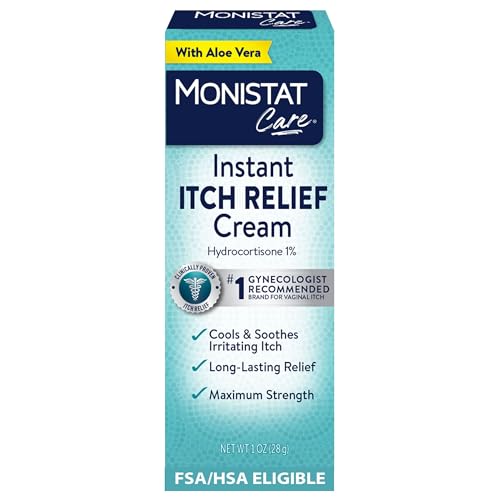
Monistat Instant Itch Relief Cream
Our take. External itch relief only. It soothes the vulva while an antifungal works, but it does not treat a yeast infection.
Pros
- Fragrance free
- External use for itch
- Pairs with any antifungal
Cons
- Does not treat the infection
- Not for use inside the vagina
| Category | Format |
|---|---|
| Vaginal health | 1 oz |
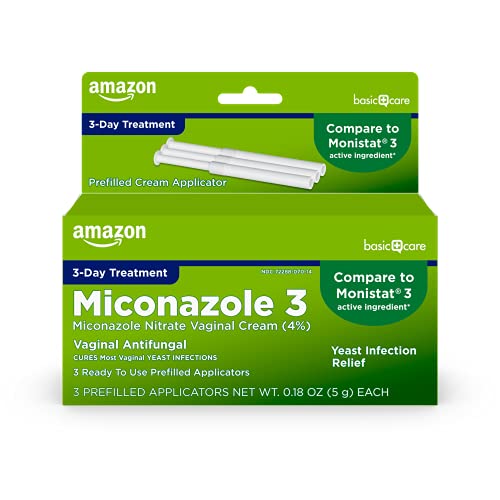
Amazon Basic Care Miconazole Nitrate 4% Cream, 3 Day
Our take. The store brand version of a 3 day miconazole cream. Same active ingredient family as Monistat for less.
Pros
- Miconazole 4 percent, a CDC listed regimen
- Prefilled applicators
- Store brand value
Cons
- No external itch cream in the box
- Oil based, can weaken latex condoms
| Category | Format |
|---|---|
| Vaginal health | 3 prefilled applicators |
Monistat 3 Combination Pack.
Three 200 mg suppositories plus external cream. The middle ground on dose and convenience. See Monistat 3 on Amazon.
Monistat 7 Cream.
The lowest nightly dose, and the 7 day length the CDC recommends in pregnancy with a clinician's OK.
Monistat 1 Combination Pack.
One 1,200 mg ovule plus external cream. The most convenient, with the most medicine at once.
Monistat Instant Itch Relief Cream.
Fragrance free external itch relief. It does not treat the infection.
Amazon Basic Care Miconazole 3 Day.
Miconazole 4 percent cream, a CDC listed regimen, as a store brand. No external cream in the box.
When to see a clinician.
See a clinician for a first ever yeast infection, for any symptoms in pregnancy, if you are not sure it is yeast, if symptoms do not improve in 3 days or last more than 7, or if they return within 2 months, which the CDC says should be evaluated and tested. Go promptly for fever, pelvic or back pain, sores, or a foul or fishy discharge. More guides are in the health hub. This page is general information, not medical advice.
Frequently asked questions.
Which Monistat is best, 1, 3 or 7?
None is more effective; the CDC does not rank one regimen above another. Monistat 1 is the most convenient, Monistat 7 has the lowest dose per night and is the length recommended in pregnancy, and Monistat 3 sits between them. Many people find the lower doses cause less burning.
Why does Monistat burn?
The label lists a mild increase in vaginal burning, itching or irritation as a possible effect, and the stronger single dose can sting more. If burning is severe, or you get a rash, hives, fever or abdominal pain, stop and call a clinician.
Can I use Monistat on my period?
The label says not to use tampons during treatment, so use pads instead. Bleeding does not stop the medicine from working, but if your symptoms do not improve in 3 days, call a clinician.
Can I have sex while using Monistat?
The label says not to have vaginal intercourse during treatment. The products are oil based and may damage latex condoms and diaphragms, so they may fail to prevent pregnancy or STIs. Wait until treatment is finished and symptoms are gone.
How do I know if it is not a yeast infection?
A fishy smell, thin gray discharge, sores, pelvic pain, fever, or symptoms that do not respond to treatment suggest something else, such as bacterial vaginosis, trichomoniasis or skin irritation. The CDC notes that self diagnosis is unreliable even for people who have had a yeast infection before.
Can I use Monistat while pregnant?
Only with a clinician's OK. The CDC recommends only 7 day topical azole treatment in pregnancy, and the Monistat label says to ask a health professional before use if pregnant or breastfeeding.
Sources
Readers also read.
 HealthBoric acid suppositories, what they are used for and who should not use them
 HealthVaginal odor, what is normal and how to get rid of the smell that is not
 HealthBurning after sex, the common causes and what actually helps
 DrynessThe best lube for sensitive skin, graded on the four things that sting