The best fertility monitors and trackers, from Inito and Mira to plain strips (2026)
Seven fertility monitors and trackers ranked on which hormones they read, how they show results and what each asks of you every cycle. Hormone monitors vs strips vs basal temperature, LH, E3G and PdG explained, what the accuracy claims actually say, and why PCOS changes the picture.
By the Wet Betty editors · Published Oct 17, 2026
Fact checked against FDA 510(k) filings, WHO guidance and the sources listed below. How we review

The best fertility monitor for most people is Inito, which reads estrogen, LH, PdG and FSH from one strip and shows numbers on your phone. Mira does similar work on its own analyzer, and Clearblue needs no app. With regular cycles, LH plus PdG strips cover most of what a monitor does. None of these is birth control.
Our picks.
Inito is the fertility monitor to buy if you want numbers for estrogen, LH, PdG and FSH from one strip; Mira does the same job on its own analyzer, Clearblue suits anyone who wants no app at all, and LH plus PdG strips cover the basics for much less effort per cycle.
- Best overall: Inito Fertility Monitor
- Best standalone analyzer: Mira Fertility Max Kit
- Best without an app: Clearblue Fertility Monitor
- Best four hormone strips: Proov Complete Fertility Test Kit
- Best budget LH strips: easy@Home Ovulation Test Strips
- Best budget ovulation check: easy@Home PdG Test Strips
- Best for temperature charting: easy@Home Digital Basal Body Thermometer
The short version.
Fertility trackers come in three types. Hormone monitors read several hormones from urine and turn them into a chart. Strips read one hormone at a time and leave the interpretation to you. Basal body temperature tracking confirms ovulation after the fact. A monitor earns its keep when cycles are irregular, when LH strips have never made sense to you, or when you want proof that ovulation is happening. If your cycles are regular and strips work, you may not need one. Our best ovulation tests covers the strip end of the market in more depth; this page focuses on monitors and on when to step up.
How we chose.
We did not use these products and make no claims about results in anyone's hands. We ranked them on:
- Which hormones they read: LH, estrogen as E3G, PdG and FSH.
- How results are shown: numbers in an app, a monitor screen, or lines you judge.
- What the brand states, including hormones measured, fertile days identified and accuracy figures, from the brand's own site or Amazon listing. We report those claims as claims.
- Effort and ongoing supplies per cycle, in strips, wands and sticks rather than dollars, since we never quote prices.
- FDA, ACOG and NICHD guidance on what home tests can and cannot tell you.
Every product is a real Amazon listing matched by ASIN.
Our full reviews.
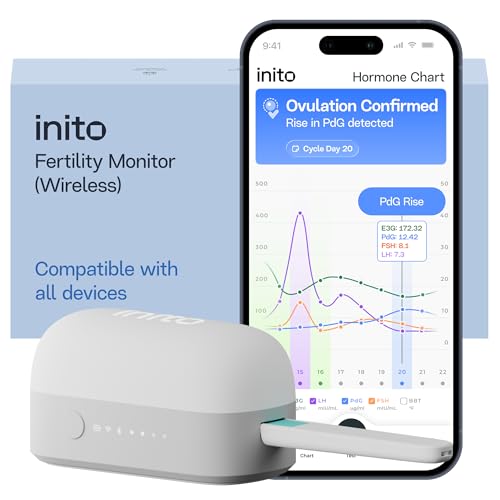
Inito Fertility Monitor
Our take. A phone mounted reader that measures estrogen, LH, PdG and FSH as numbers on one strip, the most complete home tracker on Amazon.
Pros
- Measures E3G, LH, PdG and FSH on one strip
- Gives numeric levels, not just a line
- App charts the whole cycle and confirms ovulation with PdG
Cons
- Highest upfront cost, and strips are a recurring expense
- Results live in an app, so it needs your phone every test
| Category | Format |
|---|---|
| Test | Monitor plus 15 strips |

Mira Fertility Max Kit
Our take. A handheld fluorescence analyzer that reads LH, estrogen (E3G) and PdG from one wand and shows numbers in an app.
Pros
- Max wands read LH, E3G and PdG, per Mira
- Dedicated analyzer rather than a phone camera
- Numeric hormone levels and a cycle chart
Cons
- Wands are a recurring cost
- Mira says results are not meant to diagnose PCOS or any condition
| Category | Format |
|---|---|
| Test | Analyzer plus 20 Max wands |
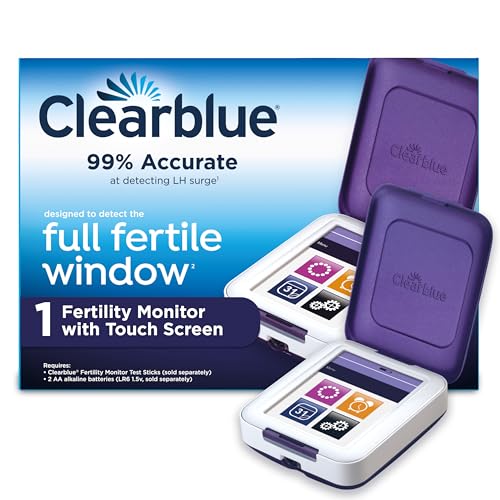
Clearblue Fertility Monitor
Our take. A standalone touch screen monitor that reads LH and estrogen and shows Low, High or Peak fertility, no phone needed.
Pros
- Reads estrogen and LH, per Clearblue
- No phone or app needed
- Clearblue says it typically finds up to 6 fertile days a cycle
Cons
- Does not read PdG, so it cannot confirm ovulation
- Test sticks are an ongoing purchase
| Category | Format |
|---|---|
| Test | 1 touch screen monitor, test sticks sold separately |

Proov Complete Fertility Test Kit
Our take. Strip tests for FSH, LH, estrogen and PdG in one cycle kit, read with the Proov app. Four hormones without buying a monitor.
Pros
- Covers FSH, LH, estrogen and PdG, per the listing
- No monitor to buy
- Proov says its PdG tests are FDA cleared
Cons
- One cycle per kit
- Several test types and days to keep straight
| Category | Format |
|---|---|
| Test | 1 cycle kit, 20 tests |

easy@Home Ovulation Test Strips
Our take. The default cheap LH strip, with an app that reads line darkness from a photo.
Pros
- 50 LH strips for a full month or two of testing
- Premom app photographs and compares strips
- FSA eligible per the listing
Cons
- LH only, cannot confirm ovulation happened
- Reading line darkness takes practice
| Category | Format |
|---|---|
| Test | 50 LH strips |

easy@Home PdG Test Strips
Our take. Plain PdG strips to pair with LH strips, the low effort way to check that ovulation happened.
Pros
- Reads PdG, the urine marker of progesterone
- Pairs with any LH strip routine
- Works with the Premom app
Cons
- PdG only, so you still need LH strips to time sex
- Lines to read, not numbers
| Category | Format |
|---|---|
| Test | 10 strips |
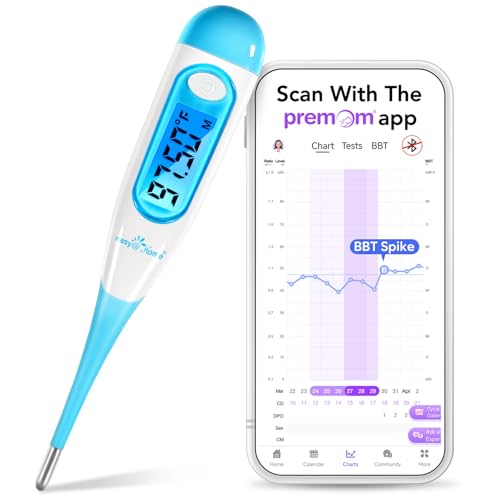
easy@Home Digital Basal Body Thermometer
Our take. A basal thermometer that reads to 1/100th of a degree and logs to the Premom app. Confirms ovulation after the fact.
Pros
- Reads to 1/100th of a degree, per the listing
- 30 reading memory and app scan
- No strips to buy
Cons
- Shows ovulation only after it happened
- Fever, alcohol and broken sleep can throw readings off
| Category | Format |
|---|---|
| Vaginal health | 1 thermometer |
The picks, one by one.
Inito Fertility Monitor, best overall.
The Inito monitor clips onto your phone and reads one test strip for four hormones: estrogen, LH, PdG and FSH. You get values and a cycle chart rather than a yes or no. Inito says it identifies six fertile days and confirms ovulation with PdG, and it promotes support for PCOS and irregular cycles. The starter box includes 15 strips, and the app tells you which days to test, so refills are the recurring cost. It needs your phone at every test. It is the most complete single strip reader on Amazon, which is why it also appears in our ovulation test ranking.
Mira Fertility Max Kit, best standalone analyzer.
The Mira Max kit pairs a small handheld analyzer with Max wands, which Mira says read LH, E3G and PdG. Mira uses fluorescent labeling, which it describes as the same approach used in labs, and sends the values to its app. Mira also sells Ovum wands for FSH and Ultra4 wands for all four hormones. It describes its devices as FDA registered and says results are not intended to diagnose PCOS or any other condition. Choose Mira if you prefer a dedicated reader to a phone camera. Wands are an ongoing purchase.
Clearblue Fertility Monitor, best without an app.
The Clearblue Fertility Monitor is the old reliable touch screen device. Clearblue says it tracks estrogen and LH, shows Low, High or Peak fertility, and typically identifies up to 6 fertile days each cycle. It reports 99 percent accuracy at detecting the LH surge in laboratory testing. Clearblue says most women need 10 test sticks a cycle, and 20 if cycles are irregular or longer than 35 days. It does not read PdG, so it cannot confirm that ovulation happened. Its strength is simplicity: no phone, no account, results on the device.
Proov Complete Fertility Test Kit, best four hormone strips.
The Proov Complete kit covers FSH, LH, estrogen and progesterone, as PdG, in one cycle kit of 20 tests, read with the Proov app. You do not buy a device. Proov says its PdG tests are FDA cleared and turn positive at 5 mcg/mL, taken on days 7 to 10 after peak fertility. The trade off is organization: several test types on different days, and a new kit each cycle.
easy@Home Ovulation Test Strips, best budget LH strips.
easy@Home LH strips come 50 to a pack, and the Premom app photographs and lines them up so the surge is visible. They predict ovulation; they do not confirm it. This is the same pick that leads our ovulation test ranking, included here because it is the honest baseline against which any monitor should be judged.
easy@Home PdG Test Strips, best budget ovulation check.
easy@Home PdG strips read PdG, the urine breakdown product of progesterone, which rises after ovulation. Paired with LH strips, they answer the one question LH cannot: did ovulation follow the surge. Ten strips cover several days of checking after your peak. You read lines, not numbers.
easy@Home Digital Basal Body Thermometer, best for temperature charting.
The easy@Home basal thermometer reads to 1/100th of a degree, stores 30 readings and logs to the Premom app, per the listing. Take your temperature at the same time each morning before getting up. ACOG says BBT rises about 0.5 to 1 degree Fahrenheit around ovulation and stays up until your period, and that the most fertile days are the 2 to 3 days before that rise. It confirms ovulation after the fact, so it works best alongside LH strips. No refills.
Fertility monitors compared.
| Tracker | Hormones or signal | How results show | Confirms ovulation | Ongoing supplies |
|---|---|---|---|---|
| Inito | E3G, LH, PdG, FSH | Numbers in a phone app | Yes, PdG | Strips |
| Mira Max | E3G, LH, PdG | Numbers via analyzer and app | Yes, PdG | Wands |
| Clearblue Fertility Monitor | E3G, LH | Low, High, Peak on screen | No | Test sticks, about 10 a cycle per Clearblue |
| Proov Complete | FSH, LH, E3G, PdG | Lines read by app | Yes, PdG | One kit per cycle |
| easy@Home LH strips | LH | Lines, app photo | No | Strips |
| easy@Home PdG strips | PdG | Lines | Yes | Strips |
| easy@Home BBT thermometer | Temperature | Chart in app | Yes, after the fact | None |
Hormone monitors vs strips vs BBT.
Strips are the cheapest per test and do one thing well. LH strips predict ovulation; PdG strips confirm it. You judge the line, and with LH you need several days of tests to see the surge build.
Hormone monitors read the same urine, but they quantify more than one hormone at once and keep the history. That matters most when cycles vary month to month, because the monitor sets a personal baseline rather than a fixed cutoff. The cost is upfront hardware and ongoing strips or wands.
Basal body temperature costs one thermometer and no refills, but it lags. ACOG says BBT shows only when ovulation has already occurred and is unreliable during a fever. It is a confirmation tool and a way to learn your pattern across cycles.
Many people combine them: LH strips to time sex, plus PdG strips or BBT to confirm.
LH, E3G, PdG and FSH, explained.
LH. Luteinizing hormone surges just before ovulation; the FDA says about 1 to 1.5 days before. The surge day and the next are usually the most fertile.
E3G. The urine breakdown product of estrogen. The FDA says it builds up around ovulation and thins cervical mucus. Rising E3G flags fertile days before the LH surge, which is why estrogen reading monitors show a wider window.
PdG. The urine breakdown product of progesterone, made after the egg is released. A sustained PdG rise in the days after peak fertility suggests ovulation happened. It is the main thing monitors add over LH strips.
FSH. Follicle stimulating hormone helps an egg mature. Inito, Mira Ovum and Ultra4 wands, and Proov Complete read it. An unusual FSH result is something to take to a clinician, not to interpret alone.
Accuracy claims, as the brands state them.
There is no independent head to head test of these monitors that we could find, so treat accuracy claims as marketing until proven otherwise. What each brand says: Clearblue reports 99 percent accuracy at detecting the LH surge in laboratory testing. Inito says it gives the most precise fertility hormone readings and outperforms competitors in its own lab testing. Mira says its fluorescence method measures hormones with high precision. Proov says its PdG tests are FDA cleared. The FDA's own figure for careful home LH and E3G testing is about 9 times out of 10, and it notes that testing at the wrong point in the cycle makes any test unreliable. The device matters less than testing on the right days, at a consistent time, as the leaflet says.
Cost per cycle.
We do not quote prices, but the structure is worth knowing. Strips are the lowest cost per cycle. Monitors add a one time device and then strips or wands each cycle; long or irregular cycles use more of them, which Clearblue spells out as 20 sticks instead of 10. Proov Complete is bought a cycle at a time. A basal thermometer is a single purchase. If budget matters, start with LH strips, add PdG strips or a thermometer, and step up to a monitor only if those leave questions open.
PCOS and irregular cycles.
NICHD says PCOS is diagnosed from two or more features: absent ovulation with light or skipped periods, high androgen levels, and follicle growths on the ovaries. Irregular ovulation, and LH that can run high, mean LH only tests may read positive often or never show a clean surge. Monitors that read estrogen and PdG give more context, and several brands market themselves for PCOS, but Mira states plainly that its results are not intended to diagnose PCOS or any condition. Perimenopause can also produce confusing readings. If tests never make sense across a few cycles, that pattern is itself useful information to bring to a clinician.
Trying to conceive, the rest of the checklist.
When the time comes, our best pregnancy tests ranks early tests on sensitivity, and best prenatal vitamins compares folic acid labels. If you use lube while trying, keep it simple and skip spermicides, warming agents and heavy fragrance; see lube ingredients to avoid and ph balanced lube. Discharge changes through the cycle line up with what these monitors measure; vaginal discharge explains the pattern.
When to see a clinician.
ACOG recommends a fertility evaluation after 1 year of regular sex without birth control, after 6 months if you are over 35, and right away if you are over 40. See a clinician sooner if periods are very irregular or absent, if LH never surges or PdG never rises across several cycles, if your monitor flags unusual FSH, or if you have pelvic pain, very heavy periods or a known condition such as PCOS or endometriosis. This page is general information, not medical advice.
Frequently asked questions.
What is the most accurate fertility monitor?
No independent study ranks them head to head. Inito and Mira both measure hormone levels as numbers with optical readers, and both claim lab grade precision. Clearblue says its monitor was 99 percent accurate at detecting the LH surge in lab testing. The FDA puts careful home LH and E3G testing at about 9 times out of 10.
Is Inito or Mira better?
Both read estrogen, LH, PdG and, on Inito and Mira Ultra4 wands, FSH. Inito clips to your phone and uses its camera; Mira uses its own handheld analyzer. Inito's box includes 15 strips. Choose Mira if you prefer a dedicated device, Inito if you want one strip for all four hormones and an easier start.
Do fertility monitors work with PCOS?
Sometimes, with caveats. PCOS can mean irregular or absent ovulation and high LH, so LH only tests may show many positives or none. Monitors that also read PdG can show whether ovulation followed. Mira says its results are not meant to diagnose PCOS. Work with a clinician rather than relying on a monitor.
Are ovulation strips as good as a fertility monitor?
For predicting ovulation in regular cycles, LH strips do the core job. Monitors add estrogen, which widens the fertile window, and PdG, which confirms ovulation. Pairing LH strips with PdG strips gets you most of the way for far less spend per cycle.
Can a fertility monitor be used as birth control?
No. The FDA says home ovulation tests should not be used to prevent pregnancy because they are not reliable for that purpose.
Is basal body temperature tracking worth it?
As a cheap add on, yes. ACOG says BBT rises slightly after ovulation and stays up, which confirms ovulation over a few cycles and can reveal your pattern. On its own it cannot tell you ovulation is coming, and ACOG notes a fever can make it unreliable.