The best menstrual cups, sized by body and flow (2026)
Eight silicone cups chosen on published capacity, sizing and materials, with a plain guide to picking a size, putting one in, taking it out and keeping it clean.
By the Wet Betty editors · Published Oct 17, 2026
Fact checked against FDA 510(k) filings, WHO guidance and the sources listed below. How we review
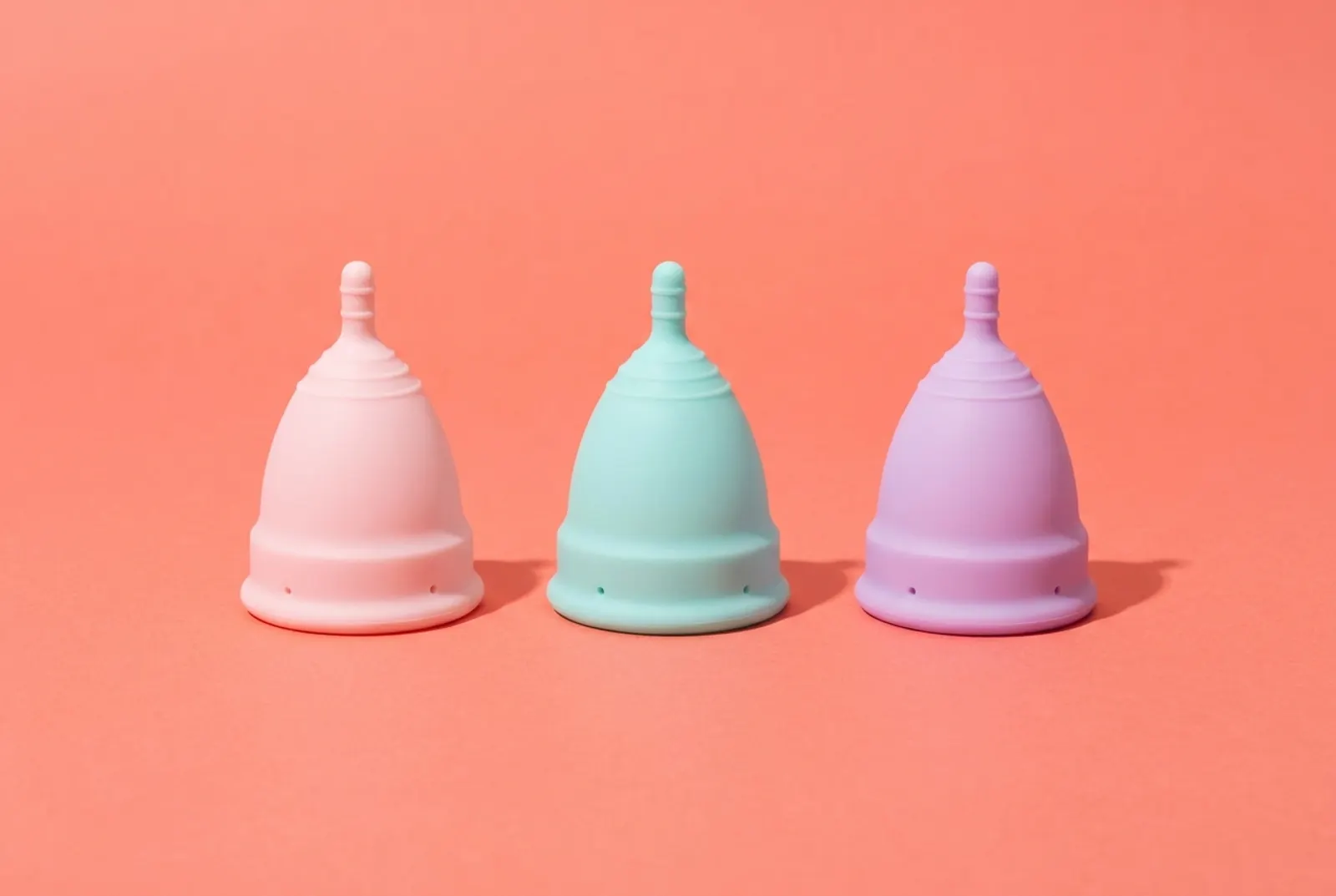
The best menstrual cup for most people is the Saalt Cup: medical grade silicone, three sizes with published capacity, and up to 12 hours of wear per the brand. But fit beats brand. Pick by cervix height, flow and how firm a rim you can tolerate, and a cup can replace tampons for years.
Our picks.
The Saalt Cup is the best menstrual cup for most people: medical grade silicone, three clearly published sizes and up to 12 hours of wear.
- Best overall: Saalt Menstrual Cup
- Best for a sensitive bladder: Saalt Soft Menstrual Cup
- Easiest removal: Flex Cup Slim Fit
- Best known: DivaCup Model 1
- Best for heavy flow: Lunette Menstrual Cup Size 2
- Best simple cup: Lena Menstrual Cup Large
- Best for teens: Intimina Lily Cup One
- Best starter kit: Pixie Soft Menstrual Cup
How we chose.
We did not wear these cups. We compared what each brand publishes and what each Amazon listing states: capacity in milliliters or tampon equivalents, the number of sizes, firmness, material, wear time and lifespan. We kept only medical grade silicone cups from established makers with a long track record and large review counts, and we checked every product link points to that exact listing. Our wider method is on how we review.
The clinical sections draw on a 2019 systematic review of 43 studies in The Lancet Public Health, a 2024 analysis of IUD expulsion in a randomized trial, and Cleveland Clinic guidance on toxic shock syndrome. None of it is medical advice. If something hurts, bring it to a clinician.
Our full reviews.

Saalt Menstrual Cup
Our take. A well made silicone cup with a clear size chart, a smooth stem and three sizes that cover most bodies.
Pros
- Medical grade silicone, BPA and latex free per listing
- Three sizes with published capacity (15, 25 and 30 ml)
- Up to 12 hours of wear per the brand
Cons
- Learning to fold and seal takes a few cycles
- Each size is sold as a separate listing
| Category | Format |
|---|---|
| Period care | Reusable silicone cup; Small 25 ml, Regular 30 ml, Teen 15 ml per brand |
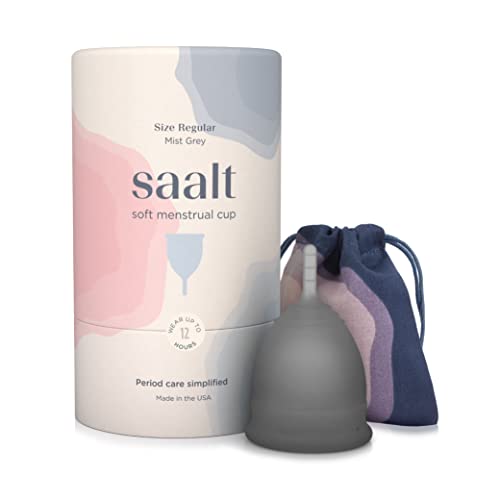
Saalt Soft Menstrual Cup
Our take. Saalt's softer version, made for people who feel pressure or cramping from a firmer cup.
Pros
- Softer silicone than the original Saalt Cup, per the brand
- Same published sizes and capacity as the original
- Up to 12 hours of wear per the brand
Cons
- Softer cups can be harder to pop open
- Strong pelvic floor muscles may squeeze it
| Category | Format |
|---|---|
| Period care | Reusable soft silicone cup, Regular (30 ml per brand); Small also sold |

Flex Cup Slim Fit
Our take. A cup with a pull tab that breaks the seal for you, which takes the hardest part out of removal.
Pros
- Pull tab breaks the seal on removal
- Lasts up to 10 years per the listing
- Starter kit includes 2 disposable discs to try
Cons
- Slim Fit holds less than larger cups
- Full Fit Size 02 is a separate listing
| Category | Format |
|---|---|
| Period care | Reusable cup, Slim Fit Size 01, capacity of 2 super tampons per listing, includes 2 disposable discs |

DivaCup Model 1
Our take. The best known cup in North America, sized by age and birth history, with a shaker cup for cleaning on the go.
Pros
- 100% medical grade silicone per the brand
- Simple sizing: Model 0, 1 and 2
- Comes with a shaker cup for washing
Cons
- Age based sizing is a rough guide, not a fit test
- A low cervix may need a shorter cup
| Category | Format |
|---|---|
| Period care | Reusable silicone cup, Model 1 (ages 18 plus, medium to heavy flow per brand), with shaker cup |

Lunette Menstrual Cup Size 2
Our take. A firmer Finnish cup with measurement lines, good for heavy days and for anyone who wants to track flow.
Pros
- Measurement lines at 7.5 and 15 ml per the brand
- Reusable for up to 10 years per the listing
- Firmer silicone opens and seals readily
Cons
- Firmer cups can press on a sensitive bladder
- Size 1 is a separate listing
| Category | Format |
|---|---|
| Period care | Reusable silicone cup, Size 2 (30 ml, normal to heavy flow per brand) |

Lena Menstrual Cup Large
Our take. A plain silicone cup made in the USA, with a Large size built for heavier flow.
Pros
- Medical grade silicone made in the USA per listing
- Large size holds about 30 ml
- Two sizes with a simple stem
Cons
- Large diameter can feel like a lot at first
- Small size is a separate listing
| Category | Format |
|---|---|
| Period care | Reusable silicone cup, Large (30 ml); Small 25 ml also sold |
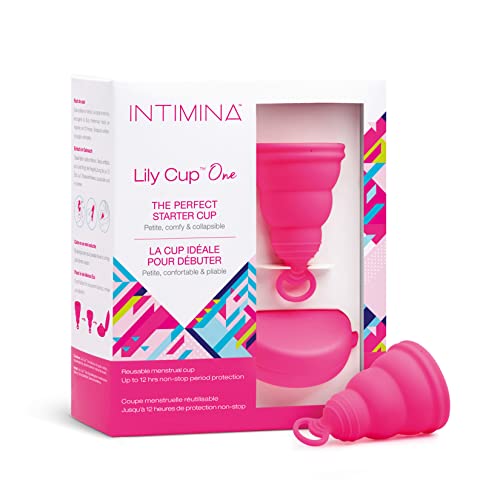
Intimina Lily Cup One
Our take. A small, collapsible starter cup designed for teens and first time users.
Pros
- Designed for beginners and teens per the brand
- Collapses flat for carrying
- Medical grade silicone
Cons
- Small capacity means emptying more often on heavy days
- Shape differs from a standard bell cup
| Category | Format |
|---|---|
| Period care | Reusable collapsible cup for beginners and teens |
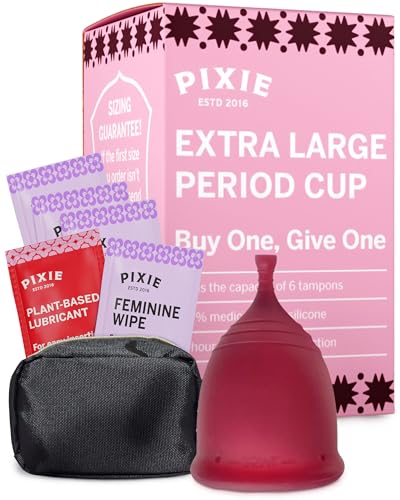
Pixie Soft Menstrual Cup
Our take. A soft cup sold as a full starter kit, with a buy one, give one donation program.
Pros
- Kit includes a guide, wipes, lube and bag
- Soft silicone for comfort
- Brand donates a cup for each one sold
Cons
- Kit extras add little if you own a cup already
- Check the brand chart to pick a size
| Category | Format |
|---|---|
| Period care | Reusable soft cup kit with guide, cleaning wipes, lube sample and storage bag |
Saalt Menstrual Cup.
Saalt publishes a clean size chart: Teen holds 15 ml, Small 25 ml and Regular 30 ml, with the Small aimed at a low cervix and first time users, and the Regular at a high cervix or after childbirth. The stem is indented rather than ridged, and the brand rates it for up to 12 hours. It is the cup we would hand a friend first. Saalt Cup on Amazon.
Saalt Soft Menstrual Cup.
Same sizes, softer silicone. A firm rim can press on the bladder or feel like pressure during cramps, and a softer cup is the usual fix. The tradeoff is that a soft cup can be slower to pop open, so you may need to rotate it once inside.
Flex Cup Slim Fit.
Flex's cup has a pull tab that breaks the seal as you pull, which removes the step most people find hardest. The Slim Fit holds the equivalent of two super tampons per the listing, so heavy days mean emptying sooner. The kit includes two disposable discs if you want to compare formats.
DivaCup Model 1.
The name most people know. Diva sizes by age and birth history: Model 0 for teens, Model 1 for ages 18 plus with medium to heavy flow, and Model 2 for 35 plus or after childbirth. That is a reasonable starting point, but cervix height still matters, so read the next section before you buy. It is 100% medical grade silicone with no dyes per the brand, and this listing includes a shaker cup for rinsing.
Lunette Menstrual Cup Size 2.
A Finnish cup with firmer silicone and measurement lines at 7.5 and 15 ml, per the brand, so you can see how much you actually bleed. Size 2 holds 30 ml for normal to heavy flow. Firmer cups open and seal easily, which helps active people and heavy days, but they are the first thing to swap if you feel bladder pressure.
Lena Menstrual Cup Large.
A plain bell shaped silicone cup made in the USA. The Large holds about 30 ml and is wider than the Small, which suits heavier flow and people who have given birth. If you are new to cups and unsure, the Small is the safer first buy.
Intimina Lily Cup One.
Designed for teens and first time users, it is small and collapses flat for a backpack. The low capacity is the point: it is easier to insert, and younger users with lighter flow do not need more. Pair it with period underwear as backup while learning.
Pixie Soft Menstrual Cup.
A soft cup sold as a kit with a guide, wipes, a lube sample and a storage bag, and the brand donates a cup for each one sold. If you want everything in one box, this is it. Check Pixie's size chart before you order.
How to pick the right size.
Four things decide fit, in roughly this order.
Cervix height. During your period, wash your hands and insert a finger. If you touch the cervix (it feels like the tip of a nose) at the first knuckle, it is low, and you want a short cup. At the second knuckle, medium. If you can barely reach it, high, and a longer cup is easier to retrieve. The cervix often sits lower during a period than at other times, so check then.
Flow. A regular tampon is rated to absorb 6 to 9 grams under the FDA's labeling standard. The cups on this list hold 15 to 30 ml. If you soak a super tampon in a few hours, start with a larger capacity cup or a menstrual disc, which holds more.
Birth history and age. Brands size up after vaginal birth and with age because the vaginal canal and pelvic floor change. Treat this as a tiebreaker, not a rule.
Firmness. Firm cups pop open and resist a strong pelvic floor. Soft cups are gentler on a sensitive bladder and during cramps. If a firm cup gives you pressure or makes you feel you need to pee, switch to a soft one before giving up on cups.
| Cup | Sizes | Capacity (largest size) | Feel | Best for |
|---|---|---|---|---|
| Saalt Cup | Teen, Small, Regular | 30 ml | Standard | Most people |
| Saalt Soft | Small, Regular | 30 ml | Softer than standard Saalt | Bladder sensitivity, cramps |
| Flex Cup | Slim, Full | 3 super tampons (Full) | Pull tab | Easy removal |
| DivaCup | Model 0, 1, 2 | See brand chart | Standard | Brand familiarity |
| Lunette | Size 1, 2 | 30 ml | Firmer (Size 2) | Heavy flow, tracking flow |
| Lena | Small, Large | 30 ml | Standard | A simple first cup |
| Lily Cup One | One size | Small | Collapsible | Teens, beginners |
| Pixie Cup | See brand chart | See brand chart | Soft, per listing | A full starter kit |
Materials and safety.
Every cup here is medical grade silicone, which is free of latex and holds up to boiling. Some cups use TPE (thermoplastic elastomer), and at least one long running brand uses natural rubber, which is a problem if you have a latex allergy. The FDA regulates menstrual cups as medical devices.
The Lancet Public Health review is the best summary of the evidence. Across studies, leakage was similar to or lower than pads and tampons where it was measured directly, cups showed no adverse effect on vaginal flora in four studies, and most participants wanted to keep using them. It also noted that learning took a few cycles. That matches what most new users report: the first two periods are practice.
Toxic shock syndrome. TSS is a rare but serious illness caused by bacterial toxins, most often linked to tampons. Cleveland Clinic notes it has also occurred with menstrual cups, and the Lancet review identified five cases. Empty and rinse the cup within the brand's wear time, wash your hands first, and get urgent care for a sudden high fever, vomiting, a sunburn like rash or dizziness during or right after your period.
IUDs. This is the real caveat. In a 2024 analysis of a copper IUD trial, 15.8% of cup users had an expulsion in the first 12 months compared with 5.0% of non users. The usual explanation is suction pulling on the strings during removal. If you have an IUD, ask your clinician before you start, always pinch the base to break the seal before pulling, keep the stem clear of the strings, and check your strings as your clinician advises. Some people choose a disc or period underwear instead.
How to insert and remove a cup.
Inserting. Wash your hands. Fold the cup (a C fold or a punch down fold, where you push one side of the rim into the base) so the rim is small. Sit, squat or put one foot on the toilet, relax your pelvic floor, and slide the cup in angled back toward your tailbone, not straight up. Let it open. Run a finger around the base or rotate it to make sure it has fully opened. A little water or a water based lube on the rim helps. Avoid silicone lube on a silicone cup, for the same reason it is a bad match for silicone toys in lube safe for toys.
Removing. Wash your hands. Bear down gently, as if starting a bowel movement, to bring the cup lower. Pinch the base to break the seal, then ease it out while keeping it upright. Do not pull by the stem alone. Empty it into the toilet, rinse, and reinsert.
If insertion is painful every time, or your muscles clamp down, that may be a pelvic floor issue rather than a cup issue. Our lube for pelvic pain guide covers when to see a pelvic floor therapist.
How to clean a cup.
During your period, rinse with cold water first (hot water can set stains), then wash with warm water and a mild, unscented soap or a cup wash, and clear the small air holes under the rim. Between periods, sanitize as the brand directs, which for most silicone cups means boiling for a few minutes. Dry it fully and store it in a breathable pouch, not a sealed container. Replace a cup that cracks, tears, turns sticky, or keeps an odor after cleaning. A cup that smells while you are using it can also point to something else; see vaginal odor.
Cups versus discs.
A cup sits low in the vaginal canal and holds by a light seal. A disc sits higher, tucked behind the pubic bone in the widest part of the vagina, with no suction. Discs usually hold more and can be worn during penetrative sex, but they are messier to remove. Cups are easier to empty cleanly once learned. If suction is your worry, especially with an IUD, a disc is the logical next try.
| Cup | Disc | |
|---|---|---|
| Where it sits | Low, below the cervix | High, behind the pubic bone |
| Suction | Light seal | None |
| Capacity | 15 to 30 ml here | Up to about 70 ml |
| Removal | Cleaner once learned | Messier, needs a finger hook |
| Sex | Not designed for it | Many are designed for it |
Cost and waste over time.
A silicone cup is a single purchase that replaces disposable tampons or pads for years, up to 10 per several brands. The upfront spend is higher than one box of tampons, and it pays back within months of regular use. The waste difference is larger: one cup and a pouch against years of applicators, wrappers and absorbent cores. Keep a backup cup or a pair of period underwear for days you cannot rinse.
Who should check with a clinician first.
Anyone with an IUD, pelvic organ prolapse, recent childbirth or pelvic surgery, a history of toxic shock syndrome, or pain with insertion should talk to a clinician before trying a cup. After birth, wait until you are cleared for internal products. Recurrent urinary symptoms while wearing a cup are worth mentioning too; a softer cup sometimes helps, and our d-mannose for UTI page covers what the evidence says about prevention.
Frequently asked questions.
Which menstrual cup is best for beginners?
A small or medium cup with a soft to medium rim and a stem that is easy to reach. The Saalt Cup in Small, the Flex Cup with its pull tab, and the Intimina Lily Cup One for teens are the easiest starting points on this list.
How do I know what size menstrual cup I need?
Check your cervix height during your period with a clean finger. If you touch the cervix at the first knuckle, it is low and you want a shorter cup. If you can barely reach it, a longer cup works. Then size up for heavy flow or after vaginal birth.
Can a menstrual cup get lost inside you?
No. The vagina ends at the cervix, and the opening of the cervix is far too small for a cup to pass through. A cup can ride high, which is why you bear down gently and reach for the base rather than the stem.
Can you pee or poop with a menstrual cup in?
Yes. The urethra and the rectum are separate from the vagina. Some people find bearing down for a bowel movement nudges the cup lower, so check the seal afterward.
Can you sleep in a menstrual cup?
Yes, within the brand's wear time, which is up to 12 hours for every cup on this list. Empty it before bed and again in the morning.
How often should you replace a menstrual cup?
Most brands say a silicone cup lasts several years and up to 10. Replace it sooner if it cracks, turns sticky or chalky, or keeps an odor after cleaning.
How do you use a menstrual cup?
Wash your hands, fold the cup (the C fold and punch down fold are the common ones), insert it angled toward your tailbone and let it open. Run a finger around the rim or give it a gentle twist to check the seal. To remove it, pinch the base to break the seal before pulling, empty, rinse and reinsert within the wearing time the brand states.