Can you use coconut oil as lube?
Yes, with two hard rules. It wrecks latex condoms, and it can linger. Here is when it is a good idea and when a real lube is better.
By the Wet Betty editors · Published Oct 17, 2026
Fact checked against FDA 510(k) filings, WHO guidance and the sources listed below. How we review
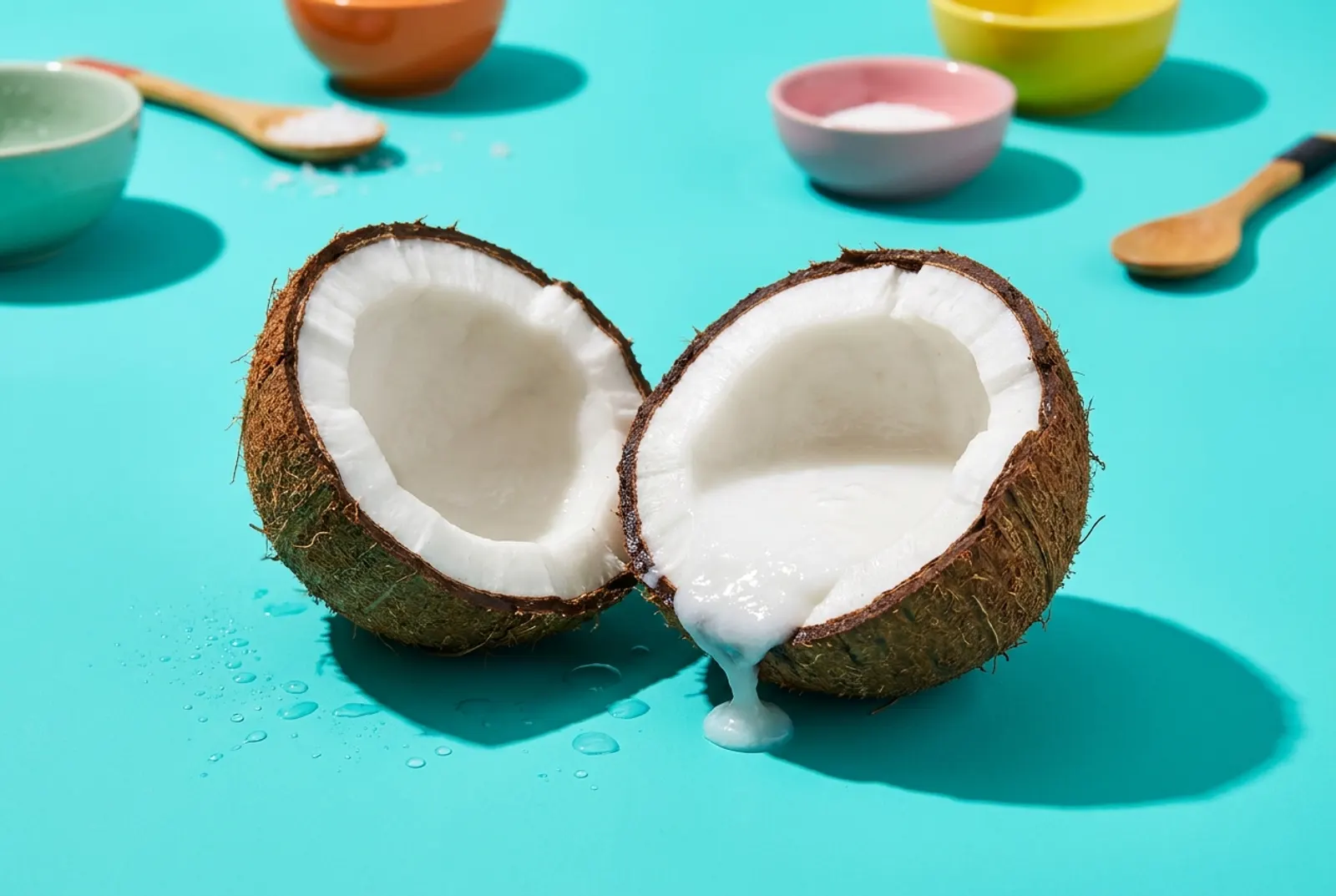
Yes, you can use coconut oil as lube, and plenty of people do. It is slippery, lasts long, and has none of the glycerin or fragrance that makes some lubes sting. Two rules: never with latex or polyisoprene condoms, which it weakens in minutes, and stop if irritation or yeast flare ups follow, because oil lingers inside.
Why people like it.
Coconut oil is solid at room temperature and melts at skin temperature, which makes it easy to apply. It does not evaporate the way water based lubes do, so one application lasts. It contains no water, so osmolality, the number that makes many commercial lubes sting, does not apply. And it is cheap and already in the kitchen. Cleveland Clinic lists coconut oil among the plant oils that typically do not irritate or cause infection, while warning against petroleum jelly and baby oil.
Why a gynecologist might wince.
Condoms. The WHO advisory on lubricants lists oils, including cooking oils, among the products that have a highly damaging effect on latex. Polyisoprene (the latex free "feel" condoms) is just as sensitive. If condoms are part of the plan, coconut oil is out. Polyurethane and nitrile condoms are the exception. The full table is in lube and condoms.
It stays. Water based lube rinses out with your body's own fluids within hours. Oil does not. For most people that is harmless. For some, especially those already prone to yeast infections or bacterial vaginosis, the change in environment is enough to trigger a flare. There is no good trial on this either way, so the honest answer is: try it, and pay attention.
It is not sterile. A jar that gets hands in it repeatedly grows what hands carry. Keep a dedicated jar, use a clean spoon, and do not double dip from the one you cook with.
Sheets. Oil stains. Keep a towel in the picture.
Ground rules for using it.
- Pick the right jar. Unrefined, virgin, food grade, nothing added. Skip anything scented, flavored or blended with other ingredients.
- Patch test. A little on the inner arm or the outer vulva first, and wait a day. Coconut allergy is uncommon but real.
- Use a clean spoon. Scoop out what you need and keep fingers out of the jar.
- Start small. A little goes a long way, because it does not evaporate.
- Rinse the outside afterward. Warm water on the outer skin is enough. Do not douche to get it out.
Toys, anal and conception.
Toys. Coconut oil wipes off silicone, glass and stainless steel with soap. Keep it off porous toys like jelly and TPE, which absorb it for good. See lube for sex toys.
Anal. It lasts, which is why people reach for it. It is harder to clean up than other lubes and it still breaks condoms, so anal sex with condoms needs a silicone or water based lube. See best lube for anal.
Trying to conceive. Many commercial lubes slow sperm. In a 1996 lab study, four common brands cut sperm motility by 60 to 100 percent within an hour, while canola oil had no detrimental effect. Coconut oil itself has little published data. If conception is the goal, a lube labeled fertility friendly is the tested route; ask your clinician.
Coconut oil for menopause dryness.
On the outer vulva, coconut oil is a reasonable moisturizer for chafed or dry skin. Inside, daily dryness is better treated by a vaginal moisturizer used every two to three days, with lube during sex on top. The difference is in vaginal moisturizer vs lube, and the full plan is in lube for menopause dryness.
When a real product is the better call.
If you love the long lasting feel but want the safety data, two upgrades exist. A silicone lube like Uberlube gives you the same no reapply experience, is condom safe, and has decades of use behind it; see best silicone lube. A purpose made oil blend like Coconu Oil Based is coconut oil plus other food grade oils, packaged cleanly, with the same condom warning. And if you want the all rounder that works with everything, a low osmolality water based lube like Good Clean Love Almost Naked (240 to 269 mOsm/kg, inside the WHO ideal of 380 or under) is still the one we would hand to most people. Other kitchen options are compared in what can you use as lube, can you use olive oil as lube and best natural lube.
Nothing here is medical advice. Irritation, itching or a change in discharge that lasts more than a few days is a reason to see a clinician.

Our take. Three silicones and vitamin E, lasts forever, feels like nothing. Not for silicone toys. Osmolality does not apply to silicone.
Pros
- Short ingredient list, no preservatives or scent
- Lasts far longer than water based
- Doubles as a shower and skin product
- Latex condom safe
Cons
- Not for silicone toys
- Needs soap to wash off
| Osmolality | WHO band | pH | Glycerin free | Latex condom safe | Silicone toy safe |
|---|---|---|---|---|---|
| Not applicable | Not applicable | n/a | Yes | Yes | No |

Our take. A food grade oil blend that doubles as a moisturizer. Never with latex or polyisoprene condoms.
Pros
- Food grade oil blend
- Lasts a long time
- Doubles as a vulva moisturizer
Cons
- Breaks latex and polyisoprene condoms
- Lingers and can stain
| Osmolality | WHO band | pH | Glycerin free | Latex condom safe | Silicone toy safe |
|---|---|---|---|---|---|
| Not applicable | Not applicable | n/a | Yes | No | Yes |

Our take. The benchmark. Aloe based, iso-osmolar, pH in the healthy range, and it does not get sticky.
Pros
- Iso-osmolar, 240 to 269 mOsm/kg
- pH 4.7, right at the healthy vaginal range
- Glycerin and paraben free
- Safe with latex condoms and silicone toys
Cons
- Thinner than a gel, so you reapply
- Faint aloe scent some people notice
| Osmolality | WHO band | pH | Glycerin free | Latex condom safe | Silicone toy safe |
|---|---|---|---|---|---|
| 240 to 269 mOsm/kg | Ideal | 4.7 | Yes | Yes | Yes |
Frequently asked questions.
Is coconut oil safe for the vagina?
For most people, yes, in small amounts. It is not sterile and it is not water soluble, so a minority notice irritation or a yeast flare. If you are prone to infections, use a water based lube instead.
Does coconut oil break condoms?
Yes. Any oil degrades latex and polyisoprene condoms quickly. Only polyurethane or nitrile condoms are oil safe.
Can you use coconut oil with sex toys?
With silicone, glass and steel toys, yes. Avoid it on porous toys (jelly, TPE), which absorb oil and are hard to clean.
What about coconut oil for vaginal dryness in menopause?
It is a reasonable external moisturizer for the vulva. Inside, a purpose made vaginal moisturizer (YES VM, Replens, hyaluronic acid inserts) is designed for the job and has published safety data.
Can you use coconut oil as lube for anal sex?
Without condoms, many people do, and it lasts well. It is harder to clean up than other lubes and still breaks latex. A silicone lube gives the same staying power and is condom safe.