How to use a vibrator, clean it, store it and know when to replace it
A plain guide for first time and long time owners. Choosing a first vibrator, using it comfortably, matching the lube to the material, cleaning by material, storage, battery care and the signs that a toy is done.
By the Wet Betty editors · Published Oct 17, 2026
Fact checked against FDA 510(k) filings, WHO guidance and the sources listed below. How we review

How to use a vibrator, in short: start external, on the lowest setting, with a drop of water based lube, and increase intensity slowly. Light, steady contact usually works better than pressing hard. Wash it with warm water and mild soap after every use, store it dry, and replace it when the surface turns sticky or the battery swells.
Choosing a first vibrator.
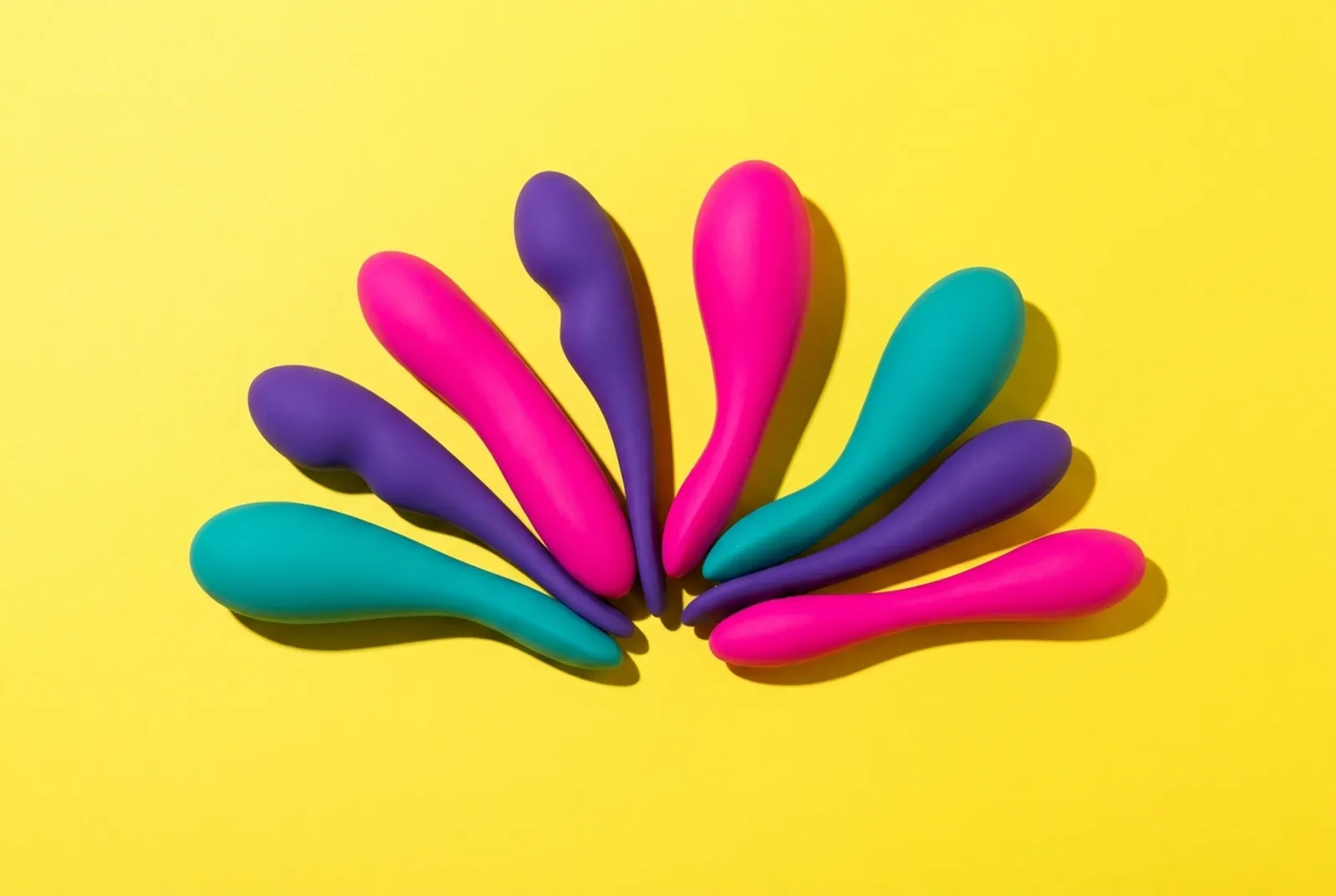
The best first vibrator is small, simple and made of body safe silicone. A first toy does not need an app, ten patterns or a lot of power. It needs a shape that is easy to hold, a few settings, and a material you can clean properly.
- Small external toys. Lipstick and bullet vibrators are the easiest start. They are quiet, inexpensive and simple. See the best bullet vibrators.
- Air pulse toys. These pulse air over the skin instead of vibrating against it, which many beginners find less overwhelming. See the best clitoral vibrators.
- Wands. Broad, deep vibration for people who already know they like strong sensation. See the best wand vibrators.
- Internal toys. Curved G-spot toys and rabbits are usually a second purchase. See the best G-spot vibrators.
Whatever the type, check the listing for a named material (silicone, glass, stainless steel or hard plastic), USB charging and a waterproof claim. A clinical reference guide for obstetrician gynecologists notes that nonporous materials are the safest and easiest to clean, and advises avoiding porous materials because they cannot be disinfected and break down over time.

Our take. A lipstick sized vibrator that charges from any USB port. The easiest first toy and the best one for travel.
Pros
- Small and discreet, looks like a lipstick
- Charges from any USB port
- Quiet, waterproof
Cons
- Not very strong
- Small surface area
| Build | Pair with |
|---|---|
| Lipstick size, USB charging, body safe silicone | Water based lube |

Our take. Air pulse at a fraction of the price. The gateway toy, for a reason.
Pros
- Air pulse for a fraction of the price
- Waterproof
- Widely loved first toy
Cons
- Louder than premium toys
- Plastic body feels cheaper
| Build | Pair with |
|---|---|
| Air pulse, waterproof, body safe silicone | Water based lube |

Our take. A low cost silicone bullet from a mass market brand, one of the most reviewed mini vibrators on Amazon.
Pros
- Low price for a silicone bullet
- Small and simple to use
- Widely sold, with a large base of owner reviews
Cons
- Less powerful than premium bullets
- Fewer settings and a plainer finish
| Build | Pair with |
|---|---|
| Silicone mini bullet, rechargeable | Water based lube |

Our take. The benchmark. Aloe based, iso-osmolar, pH in the healthy range, and it does not get sticky.
Pros
- Iso-osmolar, 240 to 269 mOsm/kg
- pH 4.7, right at the healthy vaginal range
- Glycerin and paraben free
- Safe with latex condoms and silicone toys
Cons
- Thinner than a gel, so you reapply
- Faint aloe scent some people notice
| Osmolality | WHO band | pH | Glycerin free | Latex condom safe | Silicone toy safe |
|---|---|---|---|---|---|
| 240 to 269 mOsm/kg | Ideal | 4.7 | Yes | Yes | Yes |
Using a vibrator for the first time.
- Charge it fully. Many toys ship partly charged, and a weak battery feels like a weak toy.
- Wash it. Warm water and mild, unscented soap before the first use.
- Pick a relaxed moment. Arousal makes sensation more pleasant and natural lubrication more likely, so there is no rush.
- Add a little lube. A drop of water based lube on the tip or opening helps it glide and protects skin.
- Start external and low. Use the lowest setting first, over the vulva and around the clitoris rather than directly on it. Many people find indirect contact more comfortable at first.
- Try light, steady contact. Small circles, slow movement or simply holding it still. Pressing harder does not always mean more pleasure.
- Increase slowly. Move up one setting at a time. Try patterns only once you know what a steady setting feels like.
- Give it time. Many people need a few sessions to learn what they like. That is normal.
For internal toys, use more lube, insert slowly with the curve facing the front of the body, and stop if anything hurts. Pain is a signal to stop, not something to push through.
Using a vibrator with a partner.
Small toys fit between partners during sex, and lay on, finger and wearable toys are designed to stay in place. Talk about it beforehand, start low, and let the person receiving guide placement and intensity. Ideas are in sex toys for couples and the best couples vibrator.
Lube compatibility.
Match the lube to the toy's material:
| Toy material | Water based lube | Silicone lube | Oil |
|---|---|---|---|
| Silicone | Yes | No, it can degrade the surface | Avoid on toys, hard to clean |
| Glass | Yes | Yes | Yes, but not with latex condoms |
| Stainless steel | Yes | Yes | Yes, but not with latex condoms |
| Hard plastic (ABS) | Yes | Yes | Avoid, hard to clean |
| TPE, jelly, other porous | Yes | Patch test first | Avoid |
Most quality vibrators are silicone, so a water based lube is the safe default. Some brands say their silicone toys tolerate certain silicone lubes; if in doubt, patch test on the base of the toy first. A low osmolality, glycerin free water based lube is the gentlest on vaginal tissue; Good Clean Love Almost Naked is our benchmark. The full rules are in lube safe for toys, application tips are in how to use lube, and every major brand is graded in the lube index.
How to clean a vibrator by material.
Clean every toy after every use, and before the first use. The basic method works for nearly everything: warm water, mild unscented soap, rub for about a minute, pay attention to seams, buttons and openings, rinse, and air dry on a clean towel.
- Silicone with a motor. Soap and water. Submerge only if the toy is rated waterproof; otherwise wipe and rinse the surface with the charging port kept dry. Never boil it.
- Air pulse and rose toys. Rinse the inside of the opening, where lube collects, and remove the head to wash it if the brand allows.
- Glass and stainless steel without electronics. Soap and water. These nonporous toys tolerate more aggressive cleaning; follow the brand's instructions.
- Hard plastic. Soap and water.
- TPE, jelly and other porous materials. Soap and water, but these cannot be fully disinfected. Use a condom over them and replace them sooner.
Avoid harsh chemicals, alcohol and bleach unless the brand approves them, because they can damage silicone and irritate skin. Never put a motorized toy in a dishwasher. Dry the toy completely before charging or storing it.
Cleaning lowers infection risk but does not eliminate it. In a study of HPV on vibrators, virus was still detected on some toys right after cleaning with a commercial cleaner, and on a thermoplastic elastomer toy 24 hours later in some cases. It was not detected on the silicone toy at 24 hours. If a toy is shared, use a new condom over it for each person.
Storage.
Store each toy dry, in its own cloth bag or the box it came in, away from heat and direct sunlight. Keep silicone toys from touching each other or other soft toys, because some materials react and turn sticky when stored together. Engage the travel lock or remove the batteries for long storage so the toy cannot switch on in a drawer.
Battery care.
Most vibrators use a rechargeable lithium battery. A few habits keep it healthy and safe:
- Use the cable the toy came with, or one the brand approves.
- Dry the toy fully before charging, especially magnetic contacts and ports.
- Unplug it once charged; do not leave it charging for days.
- Top it up every few months if you rarely use it, since a lithium battery left fully empty can stop holding a charge.
- Stop using a toy that gets hot while charging, swells, smells of burning or leaks, and recycle it as an electronic device.
For travel, pack the toy in your carry on with the travel lock on. FAA rules require spare lithium batteries and power banks to stay in carry on bags, and ask passengers to tell the crew if a battery powered device overheats.
When to replace a vibrator.
There is no fixed schedule. A well made silicone toy from a good brand can last for years with care; porous toys wear out much sooner. Replace a toy when:
- The surface becomes sticky, tacky, cracked, cloudy, pitted or discolored.
- It keeps a smell after washing.
- A seam has opened or the body has split, so water can get inside.
- The battery no longer holds a charge, swells or overheats.
- The motor has weakened enough that it no longer does its job.
On air pulse toys, the soft head usually wears first. Womanizer and Satisfyer sell replacement heads, which is cheaper than replacing the whole toy.
Numbness and comfort.
Temporary numbness after a long, strong session can happen and usually fades within a short time. It does not mean the toy has caused damage. In a nationally representative US survey of women, 71.5 percent said they had never had genital symptoms linked to vibrator use, and recent vibrator users scored higher on most sexual function measures. Lower settings, shorter sessions and air pulse or sonic toys help if numbness bothers you.
If dryness makes toys uncomfortable, see how to treat vaginal dryness. Burning after use is covered in burning after sex.
When to see a clinician.
Nothing here is medical advice. See a clinician for pain during or after use that keeps coming back, bleeding that is not your period, new discharge, itching or odor, numbness that does not settle, or a toy that cannot be removed. These have treatable causes, and clinicians are used to talking about sex toys.
Frequently asked questions.
How do you use a vibrator for the first time?
Charge it fully, wash it, and start external on the lowest setting with a drop of water based lube. Try light, steady contact around the area rather than pressing hard, and increase intensity slowly. Give it a few sessions; it often takes time to learn what you like.
How do you clean a vibrator?
After every use, wash it with warm water and a mild, unscented soap, paying attention to seams and openings, then rinse and let it dry fully. Only submerge a toy rated waterproof. Never boil a toy with a motor or put it in the dishwasher.
How often should you replace sex toys?
There is no set schedule. A well made silicone toy can last years. Replace it when the surface becomes sticky, cracked, cloudy or discolored, when it keeps a smell after washing, or when the battery swells, gets hot or stops holding a charge. Porous jelly or TPE toys wear out much sooner.
What is the best vibrator for beginners?
A small, simple, external toy with a few settings, such as the LELO Mia 3 or the plusOne Bullet. If you want to try air pulse, the Satisfyer Pro 2 is the low cost way in. Choose body safe silicone from a brand that names its material.
Can you use silicone lube with a vibrator?
Not with a silicone toy, because silicone lube can degrade a silicone surface over time. Use water based lube with silicone toys. Silicone lube is fine with glass, stainless steel and hard plastic toys.
Can a vibrator cause numbness?
Temporary numbness after a long, strong session can happen and usually fades. In a nationally representative US survey, 71.5 percent of women said they had never had genital symptoms linked to vibrator use. Lower settings and shorter sessions help.