The best vaginal probiotics, the strains that have been studied and what they can really do (2026)
Vaginal probiotics are one of the fastest growing shelves in women's health, and most labels promise more than the science does. Which strains have actually been studied, what the trials found, what the CDC says, and the five products worth considering.
By the Wet Betty editors · Published Oct 17, 2026
Fact checked against FDA 510(k) filings, WHO guidance and the sources listed below. How we review
The best vaginal probiotics use strains that have actually been studied: L. rhamnosus GR-1 and L. reuteri RC-14 by mouth, found in RepHresh Pro-B and Jarrow Fem-Dophilus, or L. crispatus. Even those have mixed evidence. The CDC says probiotics do not treat BV or yeast. Treat them as an optional add on after treatment, not a cure.
Our picks.
- Best studied strains: RepHresh Pro-B Probiotic
- Best shelf stable: Jarrow Fem-Dophilus 1 Billion
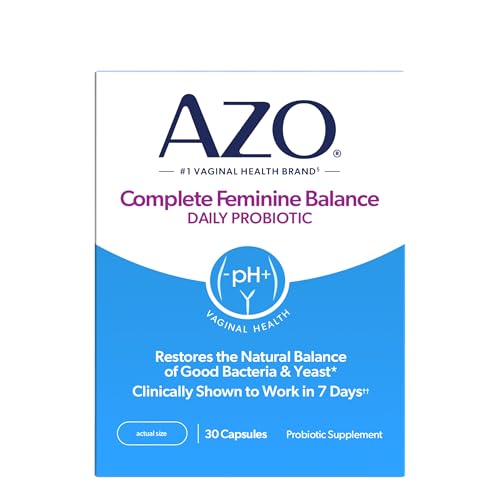
- Best with L. crispatus: AZO Complete Feminine Balance
- Most popular blend: Love Wellness Good Girl Probiotics
- For urinary focus: Uqora Promote Vaginal Probiotic
How we chose.
We did not test these products, and a probiotic cannot be judged by a few weeks of feeling fine. We ranked on three things we can check. First, the strains on the label, matched to published human trials of vaginal health. Second, the brand's stated count and format. Third, the position of the CDC and Cochrane on what probiotics can and cannot do. Every product has a verified Amazon listing and a large review base. Awards reflect strain evidence and format, not a claim that any supplement treats a condition.
What a healthy vaginal microbiome looks like.
A healthy vagina is usually dominated by Lactobacilli. They make lactic acid, which keeps the pH between about 3.8 and 4.5, and that acidity keeps out the bacteria that cause bacterial vaginosis. L. crispatus is the species most often linked with a stable, healthy microbiome. When Lactobacilli drop, BV becomes more likely, which is why the probiotic idea makes sense on paper.
Getting there with a capsule is harder. An oral probiotic has to survive the gut and then reach the vagina, and the strains in most gut probiotics are not vaginal species at all.
The strains studied.
| Strain | Taken | Best known evidence | Found in |
|---|---|---|---|
| L. rhamnosus GR-1 plus L. reuteri RC-14 | By mouth | Raised BV cure when added to metronidazole in a 2006 trial; earlier studies showed changes in vaginal flora | RepHresh Pro-B, Jarrow Fem-Dophilus |
| L. crispatus CTV-05 (Lactin-V) | Vaginally | Lowered BV recurrence after metronidazole in a 2020 NEJM trial | Not sold yet |
| L. crispatus, other strains | By mouth | Less trial data; species linked to healthy microbiome | AZO Complete Feminine Balance |
| L. acidophilus, L. rhamnosus, others | By mouth | Mostly gut research | Love Wellness Good Girl, Uqora Promote |
GR-1 and RC-14. This pair has the longest track record. RC-14 was first described as L. fermentum and later reclassified as L. reuteri, which is why older papers use a different name. In a 2001 study, 42 healthy women took them by mouth for 28 days, and the researchers reported a healthy vaginal flora in up to 90 percent of those on daily doses, while L. rhamnosus GG had no effect. In a 2006 randomized, placebo controlled trial of 106 women in Nigeria, adding GR-1 and RC-14 to metronidazole raised BV cure at 30 days to 88 percent, versus 40 percent with metronidazole and placebo.
L. crispatus. The most exciting result is vaginal, not oral. In a 2020 NEJM trial of 228 women, those who used Lactin-V after metronidazole gel had BV return in 30 percent of cases by 12 weeks, versus 45 percent on placebo. The CDC notes it is not yet FDA cleared or commercially available, and no over the counter capsule is the same product.
The evidence and its limits.
The CDC's treatment guidelines conclude that no studies support probiotic products as an add on or replacement therapy for BV, and that there is no substantial evidence for probiotics in treating yeast infections. A 2009 Cochrane review on BV found too little evidence for or against, and a 2017 Cochrane review on yeast found low quality evidence of a short term benefit as an add on, without a long term one.
The trials that look good are small, use specific strains at specific doses, and are hard to compare. A product that lists "Lactobacillus rhamnosus" without a strain code is not the same as GR-1. Probiotics are also sold as supplements, and the NIH's complementary health center notes they do not need FDA approval before they are marketed. The count on the label is often the count at manufacture.
So the fair use is narrow: after a clinician has treated BV, if you want to try something that might help the Lactobacilli come back, pick a studied strain and give it about a month. Probiotics do not replace BV treatment or yeast infection treatment.
Our full reviews.

RepHresh Pro-B Probiotic
Our take. The best known US source of L. rhamnosus GR-1 and L. reuteri RC-14, the oral strains with the most vaginal research.
Pros
- Contains GR-1 and RC-14
- 5 billion CFU per capsule at manufacture, per the brand
- Once daily
Cons
- Evidence is mixed, and the CDC does not recommend probiotics for BV
- Use within 90 days of opening, per the brand
| Category | Format |
|---|---|
| Supplement | 30 capsules |

Jarrow Fem-Dophilus 1 Billion
Our take. The same GR-1 and RC-14 pairing in a shelf stable, vegan capsule.
Pros
- Contains GR-1 and RC-14
- Shelf stable
- Vegan and gluten free per the label
Cons
- Lower count per capsule than RepHresh Pro-B
- Evidence is mixed
| Category | Format |
|---|---|
| Supplement | 60 capsules |
AZO Complete Feminine Balance
Our take. A four strain blend that includes L. crispatus, the species that dominates many healthy vaginal microbiomes.
Pros
- Includes L. crispatus LBV 88
- 5 billion CFU blend
- Once daily, with or without food
Cons
- Branded strains with little independent trial data
- Not a treatment for BV or yeast
| Category | Format |
|---|---|
| Supplement | 30 capsules |

Love Wellness Good Girl Probiotics
Our take. A popular nine strain blend with prebiotic inulin. Broad, but it skips the strains with the most vaginal research.
Pros
- Nine strains plus inulin
- Gluten free
- Widely available
Cons
- No L. crispatus, GR-1 or RC-14 listed
- Inulin can cause gas in some people
| Category | Format |
|---|---|
| Supplement | 30 capsules |

Uqora Promote Vaginal Probiotic
Our take. Uqora's daily vaginal probiotic, with L. acidophilus, L. rhamnosus and lactoferrin.
Pros
- Includes lactoferrin
- Simple once daily capsule
- Pairs with the Uqora urinary line
Cons
- Strains are not the ones with the most vaginal trial data
- Sold here as a 2 pack
| Category | Format |
|---|---|
| Supplement | 30 capsules, 2 pack |
RepHresh Pro-B.
Best studied strains. Contains L. rhamnosus GR-1 and L. reuteri RC-14, the oral pair behind the 2006 BV trial, at 5 billion CFU per capsule at manufacture, according to the brand. The brand says to use it within 90 days of opening. See RepHresh Pro-B on Amazon.
Jarrow Fem-Dophilus 1 Billion.
Best shelf stable. The same GR-1 and RC-14 pairing in a vegan capsule that does not need the fridge. The count per capsule is lower than Pro-B and lower than the 2006 trial used, so read the label and ask your clinician.
AZO Complete Feminine Balance.
Best with L. crispatus. A four strain blend of L. crispatus LBV 88, L. rhamnosus LBV 96, L. jensenii LBV 116 and L. gasseri LBV 150N, all vaginal species. Smart strain choices; the independent trial record for these exact strains is thinner than for GR-1 and RC-14. Our AZO review covers the rest of the AZO line.
Love Wellness Good Girl Probiotics.
Most popular blend. Nine strains, including L. acidophilus, L. rhamnosus and L. gasseri, plus Bacillus subtilis and prebiotic inulin. Broad, but it does not list GR-1, RC-14 or L. crispatus. Inulin can cause gas.
Uqora Promote.
For urinary focus. L. acidophilus, L. rhamnosus and lactoferrin, sold alongside Uqora's UTI line. Reasonable idea, little strain specific data. Our Uqora review covers the full line.
Side by side.
| Key strains | GR-1 and RC-14 | L. crispatus | Shelf stable | |
|---|---|---|---|---|
| RepHresh Pro-B | GR-1, RC-14 | Yes | No | Check label |
| Jarrow Fem-Dophilus | GR-1, RC-14 | Yes | No | Yes |
| AZO Complete Feminine Balance | Four vaginal Lactobacilli | No | Yes | Check label |
| Love Wellness Good Girl | Nine strains, inulin | No | No | Check label |
| Uqora Promote | L. acidophilus, L. rhamnosus, lactoferrin | No | No | Check label |
What else helps the microbiome.
The habits with better evidence than any capsule: do not douche, keep soap and fragrance off the inner vulva, use condoms with new partners, and avoid irritating lubes. The CDC says douching might raise the risk of BV relapse. A glycerin free lube near the vagina's own pH, explained in pH balanced lube, removes one variable. For washing, see the best feminine wash. For odor questions, start with vaginal odor, and for UTI prevention, see D-mannose for UTI.
When to see a clinician.
See a clinician for any new smell, discharge, itching or burning before reaching for a probiotic, since BV, trichomoniasis and yeast need different treatments. Ask before taking probiotics if you are pregnant, immunocompromised, or have a serious illness. Go back if symptoms return after treatment or come back several times a year. More guides are in the health hub. This page is general information, not medical advice.
Frequently asked questions.
Do vaginal probiotics work?
Maybe, for some people, as an add on. The best studied strains, GR-1 and RC-14, improved BV cure when added to antibiotics in one trial, but the CDC says studies overall do not support probiotics for BV, and there is no strong evidence for yeast.
What is the best probiotic for vaginal health?
On published research, a product with L. rhamnosus GR-1 and L. reuteri RC-14, such as RepHresh Pro-B or Jarrow Fem-Dophilus. L. crispatus is the species most linked with a healthy vaginal microbiome, and AZO Complete Feminine Balance includes a strain of it.
Is RepHresh Pro-B or Love Wellness Good Girl better?
On strain evidence, RepHresh Pro-B. It contains GR-1 and RC-14, the oral pair with the most vaginal research. Love Wellness Good Girl has nine strains plus inulin, but does not list GR-1, RC-14 or L. crispatus.
Can probiotics cure BV or a yeast infection?
No. BV needs prescription antibiotics and yeast infections need an antifungal. Probiotics are, at most, a possible add on after treatment.
How long do vaginal probiotics take to work?
Trials of oral strains usually run for about a month before measuring vaginal flora, so give any product at least four weeks. If symptoms appear in the meantime, see a clinician rather than waiting.
Are vaginal probiotics safe?
Trials report few side effects, mostly mild digestive upset. People who are immunocompromised, pregnant or very ill should ask a clinician first. Never insert an oral capsule vaginally unless the label says it is made for that.